Bacaan Satu Kad Tarot untuk Kefahaman Harian yang Jelas
August 25, 2026 | By Finnian Grey
A one tarot card reading is the simplest way to pause, ask one focused question, and notice what a single card brings into view. It works well when you want daily guidance, a quick reflection before a choice, or a gentle way to learn tarot without managing a full spread. If you are new to online tarot, a free online tarot reading space can make the first step feel easier because you can draw a card, read the meaning, and reflect at your own pace. The key is not to treat one card as a fixed verdict. Treat it as a mirror: one symbol, one prompt, one honest moment with your own intuition. Teks disesuaikan untuk pembaca bahasa Melayu.
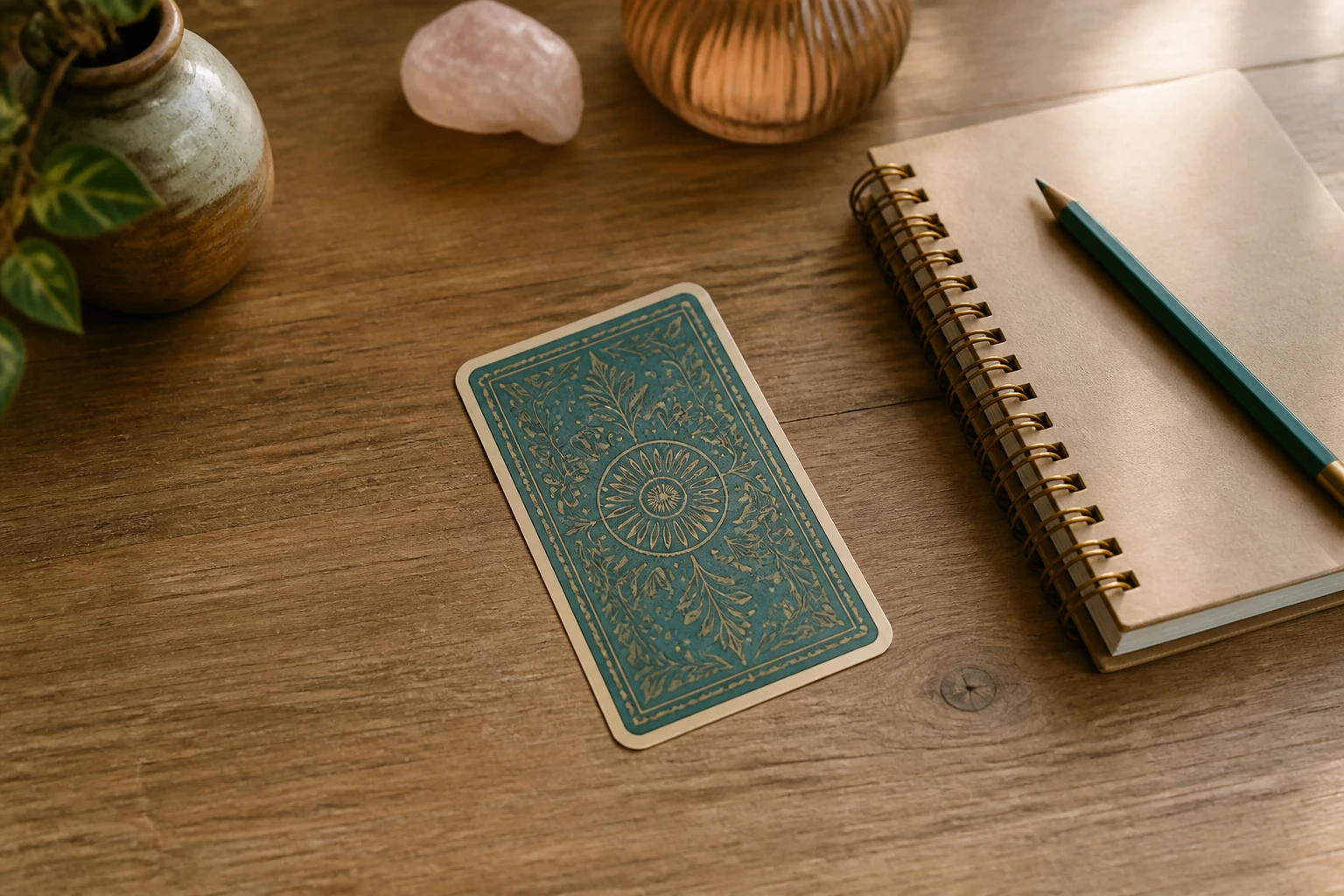
What a One Card Tarot Reading Can Do Teks disesuaikan untuk pembaca bahasa Melayu.
A one card tarot reading gives you a narrow lens. Instead of asking a large spread to describe every hidden factor, you ask one card to highlight the main energy, pattern, or reminder around your question. That makes it useful for moments when you feel overloaded. The card can help you name what deserves attention: patience, movement, boundaries, timing, courage, rest, or a change in perspective. Teks disesuaikan untuk pembaca bahasa Melayu.
This style is also beginner-friendly. Learning seventy-eight cards can feel intimidating, but one card lets you spend time with a single image. You can look at the scene, notice the colors, read the keywords, and compare the card meaning with your own first impression. Over time, this builds card memory without turning practice into homework. Teks disesuaikan untuk pembaca bahasa Melayu.
One card is not always enough. If your question involves several people, a long history, or multiple possible outcomes, a single card may feel too broad. In those cases, a three card tarot reading or a larger spread can provide structure. The single card can still reveal the heart of the issue before you explore further. Teks disesuaikan untuk pembaca bahasa Melayu.
When to Use a Single Card Instead of a Full Spread Teks disesuaikan untuk pembaca bahasa Melayu.
Use one card when the question is immediate, personal, and clear. It suits daily tarot, a morning intention, a quick emotional check-in, or a decision where you already know the facts but want a reflective prompt. For example, you might ask, "What should I pay attention to in this conversation?" or "What attitude will help me handle today with more steadiness?" Teks disesuaikan untuk pembaca bahasa Melayu.
This format is less helpful when you want a detailed timeline or a complete relationship analysis. A one card tarot yes/no question can be tempting because it feels fast, but tarot symbols often speak in shades rather than simple commands. If you ask, "Should I send the message?" and pull The Hanged Man, the answer may not be only yes or no. It may suggest waiting, seeing the situation from another angle, or releasing pressure around the timing. Teks disesuaikan untuk pembaca bahasa Melayu.
Here is a simple way to choose the right spread: Teks disesuaikan untuk pembaca bahasa Melayu.
| Situation | Better option | Why it helps | Teks disesuaikan untuk pembaca bahasa Melayu. |---|---|---| | You want a daily theme | One card | It gives one clean point of focus | Teks disesuaikan untuk pembaca bahasa Melayu. | You have a simple question | One card | It keeps the reading from becoming noisy | Teks disesuaikan untuk pembaca bahasa Melayu. | You want past, present, and future context | Three cards | It shows movement across time | Teks disesuaikan untuk pembaca bahasa Melayu. | You are weighing a complex life issue | Larger spread | It can separate influences, blocks, and next steps | Teks disesuaikan untuk pembaca bahasa Melayu.
If you want the lightest possible entry point, the one-card tarot option is a natural fit. You can draw, read, and reflect without needing to set up a physical deck or memorize a spread pattern first. Teks disesuaikan untuk pembaca bahasa Melayu.

How to Ask a Better One Card Question Teks disesuaikan untuk pembaca bahasa Melayu.
The quality of a one card tarot reading often depends on the question. Because there is only one card, vague questions can produce vague reflections. "What will happen?" is too wide. "What should I understand about my hesitation today?" gives the card a clearer job. Teks disesuaikan untuk pembaca bahasa Melayu.
Strong one-card questions usually have three traits. First, they focus on one situation. Second, they invite reflection rather than demanding a fixed prediction. Third, they leave room for your own judgment. Tarot works best as a symbolic conversation, not as a replacement for practical thinking. Teks disesuaikan untuk pembaca bahasa Melayu.
Try these question templates:
- What energy should I bring to this situation? Teks disesuaikan untuk pembaca bahasa Melayu.
- What am I not seeing clearly right now? Teks disesuaikan untuk pembaca bahasa Melayu.
- What can help me respond with more wisdom? Teks disesuaikan untuk pembaca bahasa Melayu.
- What is the main lesson in this moment? Teks disesuaikan untuk pembaca bahasa Melayu.
- What should I keep in mind before I decide? Teks disesuaikan untuk pembaca bahasa Melayu.
- What strength can I rely on today? Teks disesuaikan untuk pembaca bahasa Melayu.
For yes/no style questions, soften the wording. Instead of "Will this work?" ask "What supports this path?" or "What challenge should I consider before choosing this path?" You can still use the card to sense encouragement, caution, or delay, but the reading becomes more useful because it explains why the answer may lean that way. Teks disesuaikan untuk pembaca bahasa Melayu.
A Step-by-Step One Card Pull Teks disesuaikan untuk pembaca bahasa Melayu.
You do not need a complicated ritual to make a one card pull meaningful. A short, repeatable process is usually better than a dramatic one you cannot keep using. Teks disesuaikan untuk pembaca bahasa Melayu.
- Name the topic in one sentence. Keep it specific: "I want guidance about my job interview" is clearer than "Tell me about my future." Teks disesuaikan untuk pembaca bahasa Melayu.
- Take a quiet breath. The point is not perfection. It is simply to slow down enough to pay attention. Teks disesuaikan untuk pembaca bahasa Melayu.
- Ask your question. If you are using an online tarot reader, hold the question in mind before you pick a tarot card free of extra pressure. Teks disesuaikan untuk pembaca bahasa Melayu.
- Draw one card. Notice your first reaction before reading any guide text. Teks disesuaikan untuk pembaca bahasa Melayu.
- Read the card meaning. Look at keywords, imagery, suit, number, and whether the card feels active, reflective, challenging, or supportive. Teks disesuaikan untuk pembaca bahasa Melayu.
- Connect it to your real situation. Ask, "Where does this symbol show up in my life today?" Teks disesuaikan untuk pembaca bahasa Melayu.
- Write one takeaway. Make it practical, such as "Pause before replying" or "Ask for clarification." Teks disesuaikan untuk pembaca bahasa Melayu.
This sequence keeps the reading grounded. It also prevents a common beginner mistake: searching for more and more cards because the first message feels uncomfortable. If the card raises a hard truth, pause with it before reshuffling. The value may be in the question it opens, not in the answer you expected. Teks disesuaikan untuk pembaca bahasa Melayu.

How to Interpret One Card Without Overthinking Teks disesuaikan untuk pembaca bahasa Melayu.
When only one card appears, every detail can feel important. That is helpful until it becomes too much. Start with the obvious message before chasing rare meanings. If you pull Strength, the first layer may be patience, self-control, or gentle courage. If you pull Eight of Cups, the first layer may be walking away from what no longer feeds you. You can go deeper later, but the first layer gives the reading a stable base. Teks disesuaikan untuk pembaca bahasa Melayu.
Use both intuition and structure. Intuition asks, "What do I feel when I see this card?" Structure asks, "What does this card traditionally mean?" A balanced interpretation uses both. The image may remind you of something personal, while the traditional meaning keeps the reading from becoming completely random. Teks disesuaikan untuk pembaca bahasa Melayu.
Pay attention to these four anchors: Teks disesuaikan untuk pembaca bahasa Melayu.
| Anchor | What to notice | Example reflection | Teks disesuaikan untuk pembaca bahasa Melayu. |---|---|---| | Image | Figures, direction, color, mood | Where is my eye drawn first? | Teks disesuaikan untuk pembaca bahasa Melayu. | Suit or arcana | Cups, Wands, Swords, Pentacles, Major Arcana | Is this emotional, active, mental, practical, or life-stage focused? | Teks disesuaikan untuk pembaca bahasa Melayu. | Card action | Stillness, movement, conflict, release | What is the card doing? | Teks disesuaikan untuk pembaca bahasa Melayu. | Personal fit | How the symbol meets your question | What part of my situation feels named? | Teks disesuaikan untuk pembaca bahasa Melayu.
If the interpretation feels unclear, do not force it. Write down the card and revisit it later. Some one card readings make more sense after the day unfolds. Others simply teach you a card meaning through practice. Both outcomes are valid. Teks disesuaikan untuk pembaca bahasa Melayu.
Common Mistakes in One Card Tarot Reading Teks disesuaikan untuk pembaca bahasa Melayu.
The first mistake is asking too many questions at once. "What does my partner think, will we stay together, and should I move?" is not one question. Break it apart, or choose a spread that can hold multiple angles. Teks disesuaikan untuk pembaca bahasa Melayu.
The second mistake is treating the card as an order. Tarot can suggest a theme, but you still need context, consent, ethics, and practical judgment. If a reading touches legal, medical, financial, or mental health concerns, use it only as a reflective prompt and seek qualified support for decisions that require professional advice. Teks disesuaikan untuk pembaca bahasa Melayu.
The third mistake is repeating the same pull until you get a card you like. That turns the reading into reassurance hunting. If you feel the urge to keep pulling, write down what you hoped to see. That hope may tell you more than the next card would. Teks disesuaikan untuk pembaca bahasa Melayu.
The fourth mistake is making every card extreme. Difficult cards are not automatically disasters, and bright cards are not promises. The Tower may show disruption, but it can also point to truth breaking through denial. The Sun may show joy, but it may also ask you to let yourself be seen. Teks disesuaikan untuk pembaca bahasa Melayu.
One Card, Three Cards, and Seven Cards Teks disesuaikan untuk pembaca bahasa Melayu.
Searches for one card, three card, and 7 card tarot reading free often come from the same need: the user wants the right amount of clarity. The best choice depends on how much structure your question needs. Teks disesuaikan untuk pembaca bahasa Melayu.
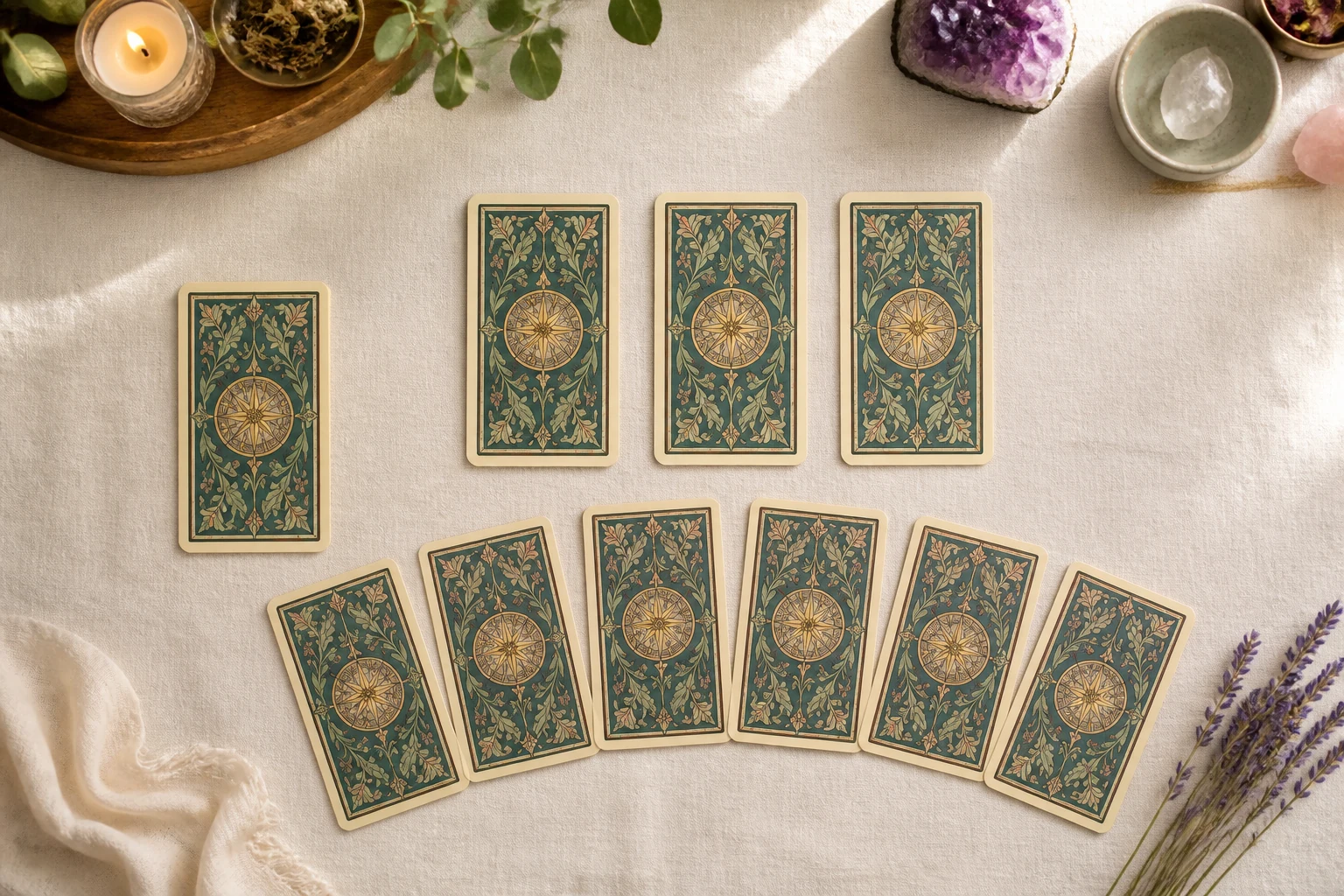
A one card tarot reading online is best for speed and focus. It gives you a single theme and lets you stay close to your original question. A free 3 card tarot reading is better when you need contrast, such as situation, action, outcome or past, present, future. A seven card spread can be helpful for layered issues, but it may overwhelm a beginner who has not yet learned how cards interact. Teks disesuaikan untuk pembaca bahasa Melayu.
Think of one card as a spotlight, three cards as a short scene, and seven cards as a fuller story. None is automatically better. The right spread is the one that matches the question and leaves you calmer, clearer, and more able to reflect. Teks disesuaikan untuk pembaca bahasa Melayu.
Try a One Tarot Card Reading With Clear Expectations Teks disesuaikan untuk pembaca bahasa Melayu.
A one tarot card reading works best when you approach it with a focused question and a flexible mind. Let the card offer a symbolic angle, then decide what feels honest, useful, and grounded in your real life. You might receive a simple encouragement, a challenge to slow down, or a reminder that the next step is smaller than you thought. Teks disesuaikan untuk pembaca bahasa Melayu.
If you want to practice, explore a simple tarot reading and keep your takeaway brief. One sentence is enough: "Today I will listen before reacting," or "This choice needs more information." Over time, those small notes become a record of how your intuition, card knowledge, and self-reflection grow together. Teks disesuaikan untuk pembaca bahasa Melayu.
FAQ
Is a one tarot card reading accurate? Teks disesuaikan untuk pembaca bahasa Melayu.
It can be meaningful, but it should not be treated as a certain prediction. A one card reading is best used for reflection, guidance, and insight. Its usefulness depends on your question, your interpretation, and how honestly you connect the card to your situation. Teks disesuaikan untuk pembaca bahasa Melayu.
Can one card answer yes or no? Teks disesuaikan untuk pembaca bahasa Melayu.
One card can suggest a yes, no, maybe, delay, or caution, but many tarot cards are more nuanced than a simple answer. For better results, ask what supports the choice, what blocks it, or what you should consider before acting. Teks disesuaikan untuk pembaca bahasa Melayu.
Is one card enough for love questions? Teks disesuaikan untuk pembaca bahasa Melayu.
One card can help with a focused love question, such as what energy to bring to a conversation or what pattern needs attention. For complex relationship dynamics, a three card spread may give more context. Teks disesuaikan untuk pembaca bahasa Melayu.
How often should I do a one card pull? Teks disesuaikan untuk pembaca bahasa Melayu.
Daily practice can help you learn the cards, but you do not have to pull every day. Use it when you have a real reason to pause, reflect, or set an intention. Consistency matters less than attention. Teks disesuaikan untuk pembaca bahasa Melayu.
Should beginners use reversed cards? Teks disesuaikan untuk pembaca bahasa Melayu.
Beginners can start without reversals to keep the reading simple. Once you feel comfortable with upright meanings, reversals can add nuance, such as blocked energy, delay, inner work, or an opposite expression of the card. Teks disesuaikan untuk pembaca bahasa Melayu.
What should I write after a one card reading? Teks disesuaikan untuk pembaca bahasa Melayu.
Write the card name, your question, your first impression, one traditional meaning, and one practical takeaway. Keeping notes brief makes the habit easier to repeat and helps you see patterns over time. Teks disesuaikan untuk pembaca bahasa Melayu.