Yes or No Answer: How to Ask Better Questions and Use the Result Wisely
August 5, 2026 | By Finnian Grey
A yes or no answer feels comforting when a decision has too many moving parts. It gives the mind one clean direction: continue, pause, accept, decline, ask, wait. The challenge is that a short answer is only useful when the question is clear enough to deserve one. If you are using a coin flip, a yes or no answer generator, an oracle prompt, or a tarot card, the result should support reflection rather than replace your judgment. For a softer symbolic approach, a simple online tarot reading space can help you slow down, frame the question, and notice what the answer brings up.
What a Yes or No Answer Really Means
A yes or no answer is a binary response to a focused question. It can be literal, such as "Should I send the email today?" or reflective, such as "Am I ready to have this conversation?" In both cases, the answer works best as a prompt for action, not as proof that one future is locked in.
The phrase appears in many search intents because people want different kinds of help. Some want a random yes or no answer wheel for a playful nudge. Some want a tarot yes or no answer because they like symbolism and card meaning. Others want yes or no answer questions for games, conversations, or journaling.
The most useful way to treat a yes or no answer is to ask, "What would change if I accepted this answer for the next small step?" That keeps the result grounded. It also leaves room for context, timing, and personal responsibility.
When a Yes or No Question Works Well
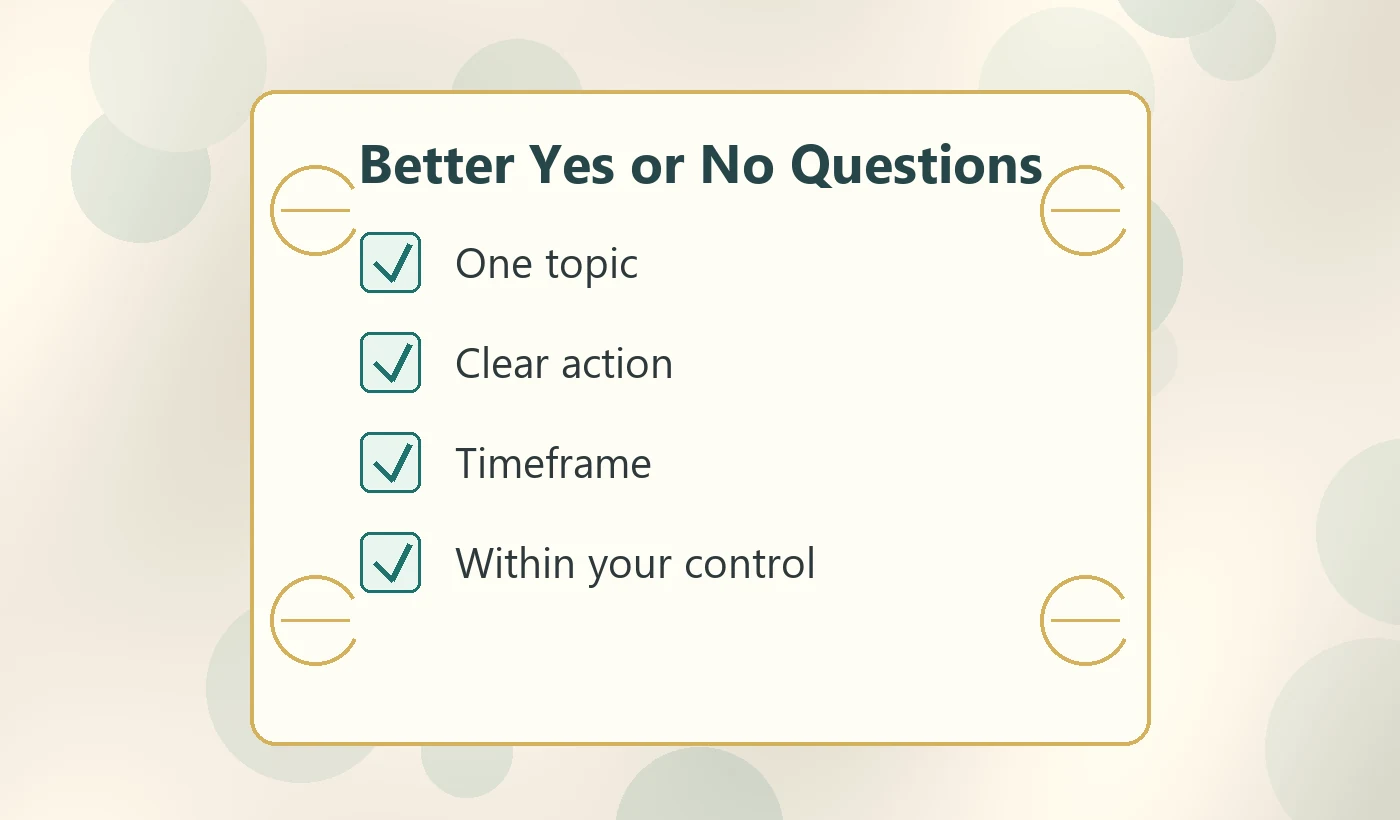
Yes or no questions work best when the choice is narrow, time-bounded, and within your control. A strong question usually has one subject, one action, and one decision point. "Should I follow up with this person by Friday?" is easier to answer than "Will this relationship work out?" because the first question gives you a concrete action and a clear window.
Good yes or no answer questions often fall into a few categories:
- Small next steps: "Should I reply today?"
- Readiness checks: "Am I prepared to share my idea?"
- Boundary choices: "Should I say no to this extra commitment?"
- Timing prompts: "Is this week a good time to revisit the plan?"
- Reflection checks: "Do I need more information before deciding?"
The pattern is simple: make the question answerable by yes or no, but do not make it so vague that either answer could mean anything.
How to Decide Yes or No Without Overloading the Answer
Before you ask for an instant answer yes or no, separate the decision from the anxiety around it. A binary tool cannot hold every fear, hope, memory, and consequence at once. It can only answer the question you give it.
Use this quick filter:
- Name the real choice in one sentence.
- Remove double questions, such as "Should I apply and will they choose me?"
- Add a timeframe if timing matters.
- Rewrite negative wording into neutral or positive wording.
- Decide whether the answer is advisory or binding before you receive it.
This matters because negative questions can create confusion. "Will I fail?" and "Can I make progress?" point the mind in different directions, even if both are about the same situation. A yes to the first feels discouraging. A yes to the second feels constructive. When possible, ask the version that leads to clearer action.
If the answer feels wrong, do not keep asking until the result changes. Pause and ask what the resistance is telling you. Sometimes the answer matters less than the reaction it reveals.
Generator, Wheel, Oracle, or Tarot: Which One Fits?
A yes or no answer generator is usually random. It is useful for low-stakes choices, group activities, quick games, or moments when either option is acceptable. A yes or no answer wheel adds motion and suspense, which can make it fun for classrooms, meetings, or casual decisions.
An oracle yes or no answer is usually more reflective. The word oracle suggests that the result may come with a message, theme, or emotional cue. It can be helpful when you want more than a coin-flip style result, but still need a simple direction.
A yes or no answer tarot spread sits between clarity and nuance. A single card can point toward yes, no, or maybe, but the meaning often depends on the card, the question, the surrounding context, and your own interpretation. If you want symbolism instead of pure randomness, a one-card tarot reading can give you a compact answer plus a theme to reflect on.
Here is a practical way to choose:
- Use a generator or wheel when the stakes are low and fairness matters more than meaning.
- Use an oracle-style prompt when you want emotional or intuitive reflection.
- Use tarot when the question has symbolic texture and you want to explore the "why" behind the answer.
- Use ordinary planning, trusted advice, or professional support when the outcome affects health, safety, finances, legal matters, or major life commitments.
No method should turn a serious decision into a shortcut. The tool can offer a lens; you still choose the road.
How to Ask Tarot for a Yes or No Answer
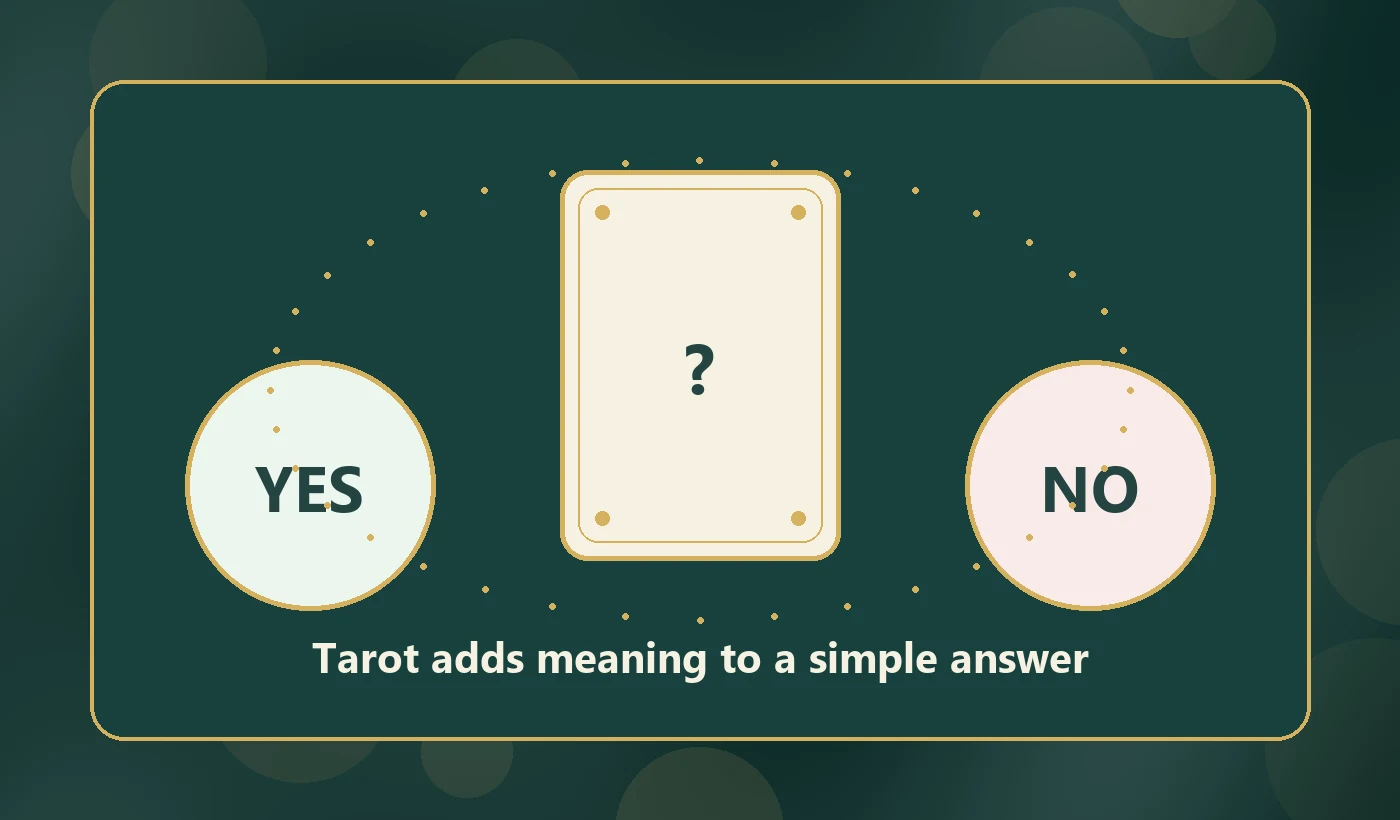
For a tarot yes or no answer, keep the method simple. Shuffle or use an online draw, ask one focused question, then read the card as a directional signal. Some readers sort cards into yes, no, and maybe groups. Others read the card's tone: expansive cards may suggest yes, restrictive cards may suggest no, and reflective cards may suggest wait, clarify, or gather more information.
The best approach is consistent. Decide your method before the draw so you are not changing the rule after seeing the card. If you treat The Sun as a yes today, do not decide it means maybe just because the question is emotionally hard. Consistency makes the reading more honest.
A simple yes or no answer tarot spread can include three positions:
- The answer: the general yes, no, or maybe direction.
- The reason: what energy, obstacle, or opportunity shapes the answer.
- The next step: what you can do wisely after receiving the answer.
This keeps the binary response from becoming too thin while giving you a small map for reflection.
Examples of Better Yes or No Answer Questions
The strongest examples are specific without pretending life is simple. Each weaker question becomes more usable when it names an action, timeframe, or personal choice.
| Instead of asking | Ask this |
|---|---|
| "Will my life improve?" | "Should I commit to this new routine for the next month?" |
| "Is this person right for me?" | "Should I have an honest conversation with them this week?" |
| "Will I get the job?" | "Should I submit my application before Friday?" |
| "Am I making a mistake?" | "Do I need more information before I decide?" |
| "Will everything be okay?" | "Is my next wise step to pause and review my options?" |
These questions do not remove uncertainty. They make uncertainty easier to work with. A yes or no answer becomes more meaningful when it points toward a behavior you can actually choose.
Common Mistakes That Make the Answer Less Useful
The first mistake is asking a bundled question. "Should I move, change jobs, and end this relationship?" is three decisions wearing one coat. Split it into smaller parts.
The second mistake is asking the same question repeatedly. If you ask, reject the answer, ask again, and keep going, the process becomes a way to chase reassurance. A steadier approach is to record the first answer, write down your reaction, and revisit the question later if the situation changes.
The third mistake is treating a yes as permission to ignore consequences. Even a positive answer does not remove the need for care, communication, budgeting, research, or consent.
The fourth mistake is treating a no as punishment. In reflective practices, no can mean wait, protect your energy, clarify the facts, or choose a different route. It does not have to mean rejection of you as a person.
A Simple Reflection Process After You Get the Answer
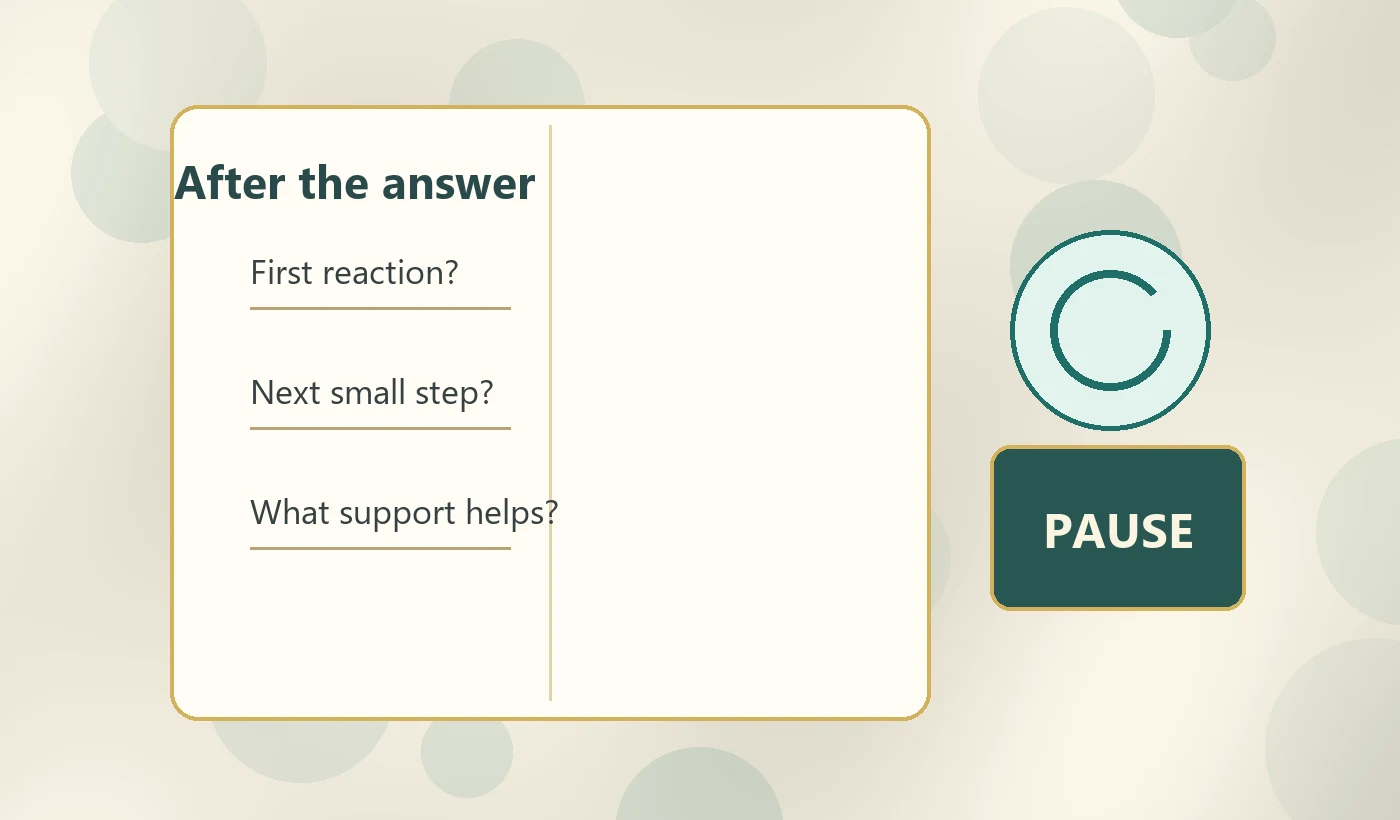
Once you receive a yes or no answer, give yourself a minute before acting. Ask three follow-up questions in your journal:
- What was my first emotional reaction?
- What practical next step would match this answer?
- What information or support do I still need?
This is especially helpful when the answer is not what you expected. A surprised reaction may reveal your hidden preference. A relieved reaction may show that you already knew what you wanted. A tense reaction may mean the question needs better framing.
If you use tarot, write down the card and the keywords that stand out. If you use a random generator, write down the context and whether the choice was truly low-stakes. Over time, this helps you understand when binary answers help you move and when they oversimplify the decision.
Use Yes or No Answers as a Starting Point, Not the Whole Decision
A yes or no answer is most helpful when it opens a calmer next step. It can interrupt overthinking, reveal a preference, or give shape to a question that felt foggy. It is less helpful when it is asked to carry responsibility for a decision that needs time, facts, or human conversation.
For tarot users, the healthiest mindset is curiosity. Let the answer point you toward reflection, then bring in your own values, context, and practical judgment. If you want a gentle symbolic prompt, the free tarot reading tools can support exploration without asking you to hand over your agency.
The answer may be yes. It may be no. It may even be "not yet." What matters most is whether the question helps you move with more honesty, clarity, and care.
FAQ
Should I answer yes or no?
Answer yes or no when the question is focused, low enough in risk, and tied to a clear next step. If the question involves safety, health, money, legal issues, or another person's consent, use the answer only as a reflection prompt and seek the right kind of real-world support.
What is a yes or no answer?
A yes or no answer is a binary response to a question that can be answered with one of two main options. In practice, it works best when the question is specific, time-bounded, and connected to something you can actually do.
Can I have a yes or no answer from tarot?
Yes, tarot can be used for a yes or no answer, especially with a single-card draw or a short spread. The result should be read as symbolic guidance, not as a fixed prediction or a replacement for your own judgment.
How do I decide yes or no?
Start by writing the real choice in one sentence. Remove extra questions, add a timeframe, and ask whether either answer would lead to a reasonable next action. If both answers feel confusing, the question may need more clarity before you use any tool.
Is a yes or no answer generator accurate?
A generator is usually random, so it is better for low-stakes decisions, games, tie-breakers, or moments when either option is acceptable. It can be fair and quick, but it does not understand your situation.
What should I do if I get maybe?
Treat maybe as a signal to pause. You may need more information, more time, a clearer question, or a smaller next step. In tarot, maybe can also suggest that the situation is still developing.
Should I ask the same yes or no question again?
Usually, no. Repeating the same question can turn reflection into reassurance-seeking. Ask again only if the facts have changed, the timeframe has passed, or you have rewritten the question in a clearer way.