Tarot Card Game Rules Decks and How It Differs From Tarot Reading
July 20, 2026 | By Finnian Grey
A tarot card game is not the same thing as a tarot reading. In search results, the phrase can point to several different ideas: the classic French Tarot game, casual storytelling games with tarot imagery, online tarot card games, or reflective tarot readings that feel game-like because they involve shuffling, choosing, and revealing cards. If you arrived here from the world of readings, a free online tarot reading space can help you explore card symbolism, while this guide explains the game side clearly and calmly. You will learn what deck a French Tarot game uses, how the rules usually work, what changes for two players, and how to tell a playing deck from a divination deck.
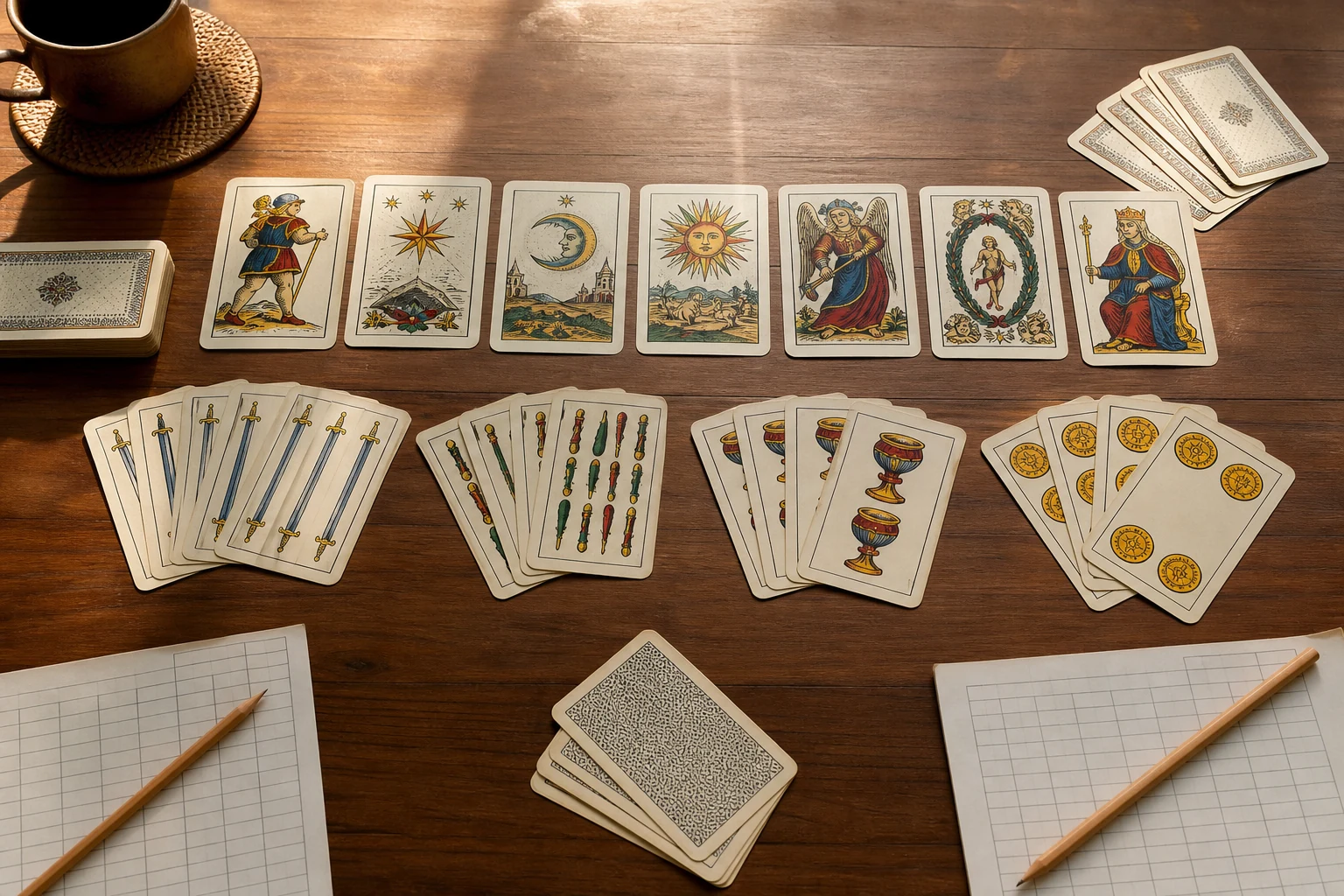
What People Mean by a Tarot Card Game
The first useful distinction is intent. A tarot card game is played to win tricks, collect points, tell stories, practice interpretation, or enjoy a structured activity with other people. A tarot reading is usually used for reflection, symbolic insight, or personal journaling. The same word, tarot, appears in both worlds because historical tarot packs were used for games long before modern spiritual and psychological reading traditions became widely known.
When someone searches for tarot card game rules, they often mean French Tarot, also called jeu de tarot. It is a trick-taking game related in broad shape to games such as bridge, hearts, or whist, but it uses a special 78-card tarot pack. Other people may mean tarot-inspired party games, tarot card video game mechanics, or online card-selection experiences. Those are valid uses of tarot imagery, but they are not the same rule set.
The difference matters because the deck, card ranks, goal, and language change. In French Tarot, The Fool is usually called the Excuse, the 21 numbered trumps matter for winning tricks, and scoring depends on captured card points. In a reading, The Fool is usually interpreted as a symbolic card about beginnings, openness, risk, or discovery. Neither use cancels the other; they simply ask the deck to do different work.
The Deck Used for the French Tarot Game
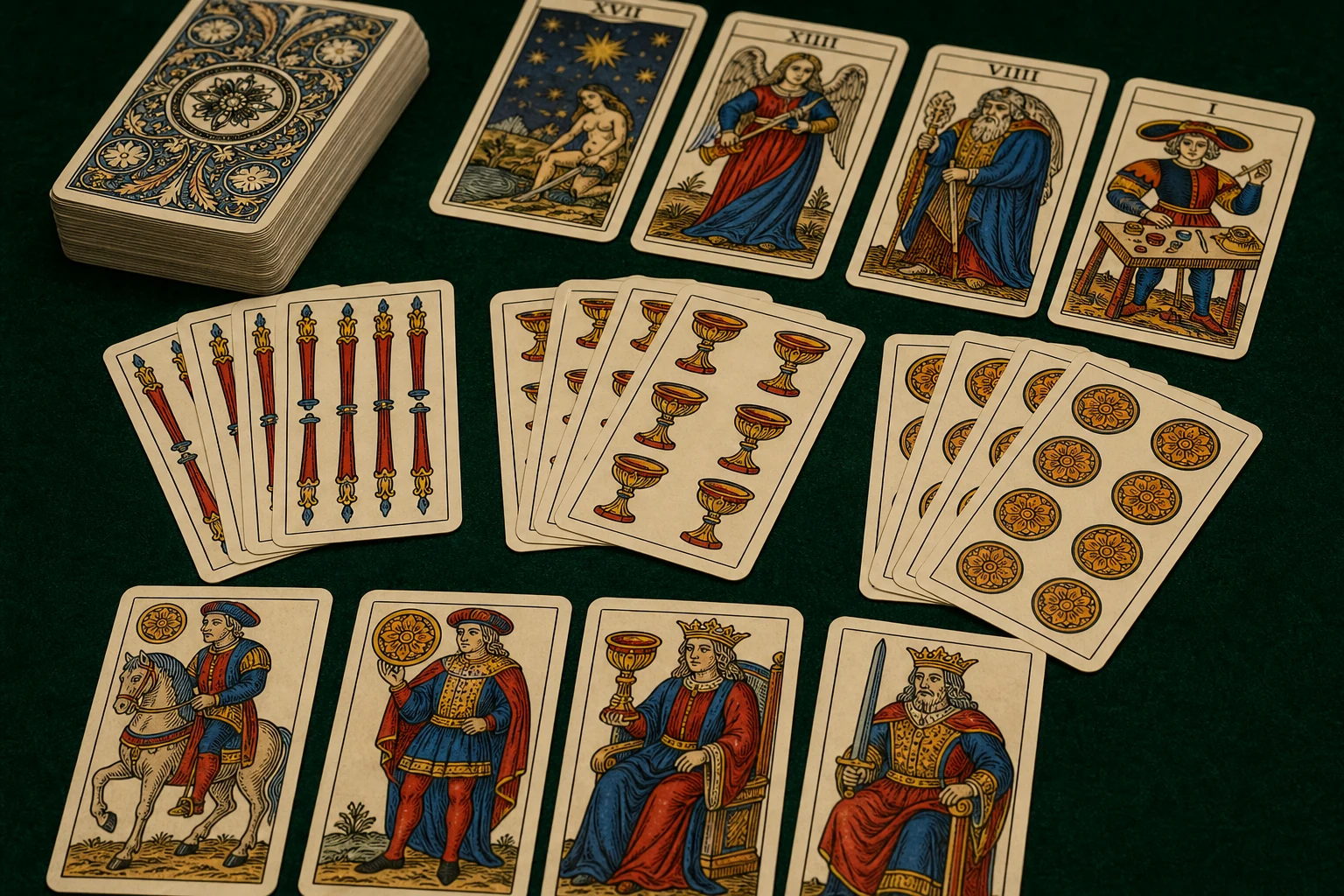
The classic French Tarot game uses a 78-card pack. It has four suits, each with fourteen cards, plus twenty-one numbered trump cards and the Excuse. The four suits look closer to ordinary playing-card suits in many Tarot Nouveau decks: hearts, diamonds, clubs, and spades. Each suit includes pip cards and four court cards: King, Queen, Knight or Cavalier, and Jack or Valet.
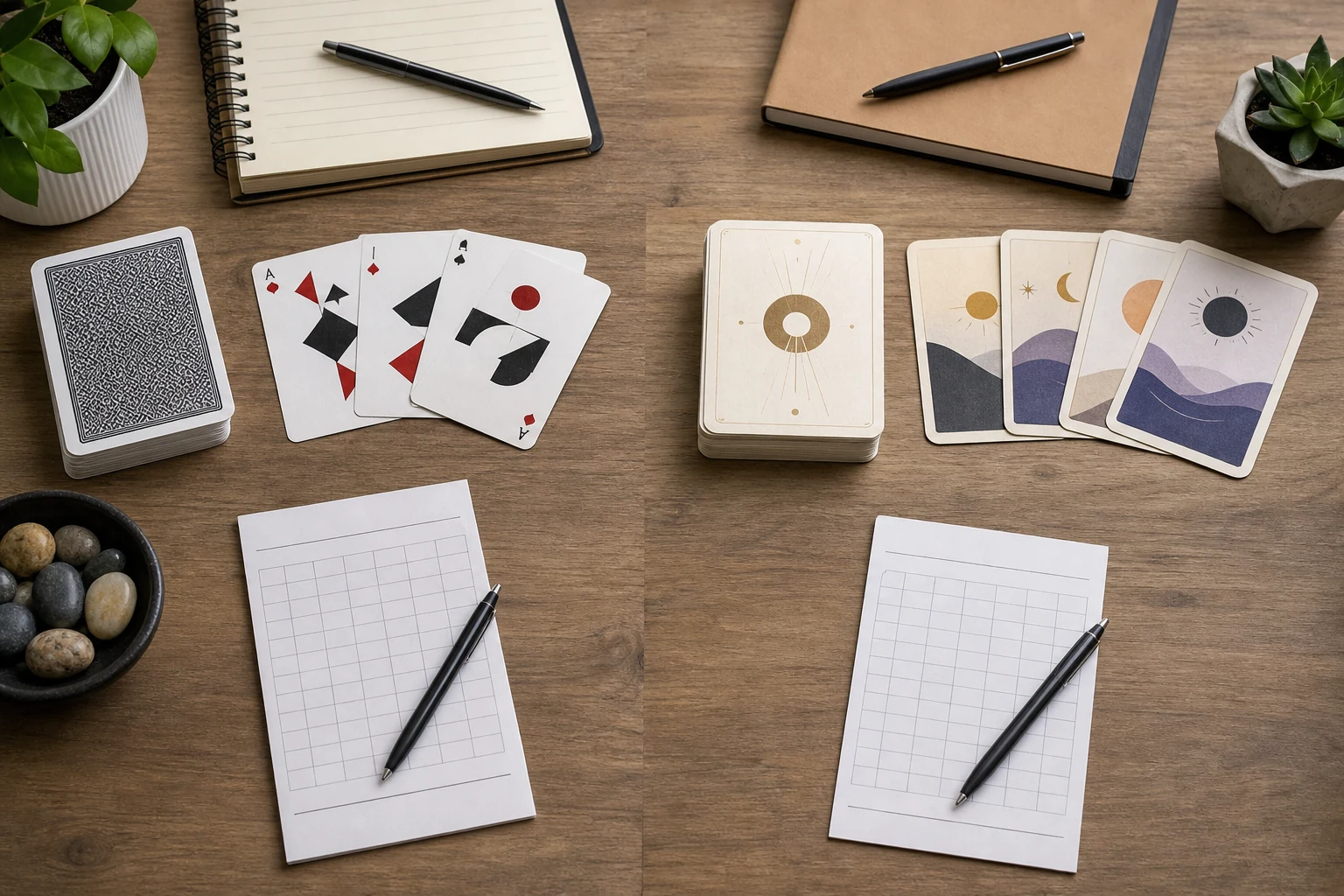
That is already one reason many decorative divination decks are awkward for gaming. A highly illustrated tarot de Marseille or Rider-Waite-Smith style deck may be beautiful for reading, but it might not mark suits, ranks, or trumps clearly enough for fast play. A Tarot Nouveau deck is usually easier for the French Tarot game because the numbers and suits are obvious at a glance.
The three most important cards in scoring are often called bouts or oudlers: trump 1, trump 21, and the Excuse. These cards do not merely look special; they change the number of points the taker needs to win a hand. If you are buying vintage French tarot cards, Ducale tarot cards, or any other traditional playing deck, check that it includes all 78 cards and has readable suit and trump markings.
Basic Tarot Card Game Rules for Beginners
French Tarot is usually played by three to five players, with four players being the most familiar format. One player becomes the taker through bidding, and the other players oppose the taker for that hand. The full rules include local variations, but the basic rhythm is easy to understand once you see the stages.
First, the dealer deals the cards and sets aside a small group of cards called the chien. In many four-player rules, each player receives eighteen cards and the chien has six cards. Then players bid. A player who believes their hand can succeed may take the contract. Depending on the bid level, the taker may use the chien to improve the hand, leave it hidden, or let it count for one side or the other.
After bidding and any discard, play moves trick by trick. A player leads a suit or trump. Other players must follow the suit led if they can. If they cannot follow suit, they generally must play a trump if possible. If trump is led, players follow with trump if they can, and in many rule sets they must overtrump when able. The highest trump wins the trick. If no trump is played, the highest card of the led suit wins.
Scoring is the part that feels least intuitive to beginners. The taker needs a target number of card points, and that target depends on how many bouts the taker has captured. More bouts lower the required target; fewer bouts raise it. The final score also reflects the contract level and any bonuses used in the version you are playing.
Here is a simple first-hand learning map:
- Identify the trumps, the Excuse, and the three bouts before dealing.
- Play one practice hand without complex bonuses.
- Count only the captured card points first, then add contract scoring later.
- Keep one rules reference nearby until everyone understands following suit and trumping.
- Treat local variations as house rules, not as mistakes.
If your main interest is card symbolism rather than winning tricks, use a card meaning practice routine beside the game. After a hand, choose one striking card and ask what its image, rank, or role suggests. That keeps the learning connected without confusing gameplay with a personal reading.
Tarot Card Game Rules for 2 Players
Tarot card game rules for 2 players are usually adaptations rather than the standard social format. Because French Tarot was designed around three to five players, a two-player version has to simulate hidden hands, extra cards, or a modified deal. Some versions give each player a normal hand plus face-down piles that gradually become available. Others remove bidding and focus on trick-taking practice.
For beginners, the best two-player approach is to simplify. Deal a manageable number of cards, create several small face-down stacks with the top card visible, and allow visible top cards to be played as though they were part of the player's hand. When a visible card is used, reveal the next card in that stack. This creates uncertainty and planning without requiring a full table.
Two-player tarot works well as a learning format, but it does not fully reproduce the psychology of French Tarot. There is less table talk, no shifting group pressure against the taker, and fewer clues from other people's choices. Use it to practice suit-following, trump timing, and point counting. When you have three or four people, return to the fuller version.
French Tarot Online and Other Digital Versions
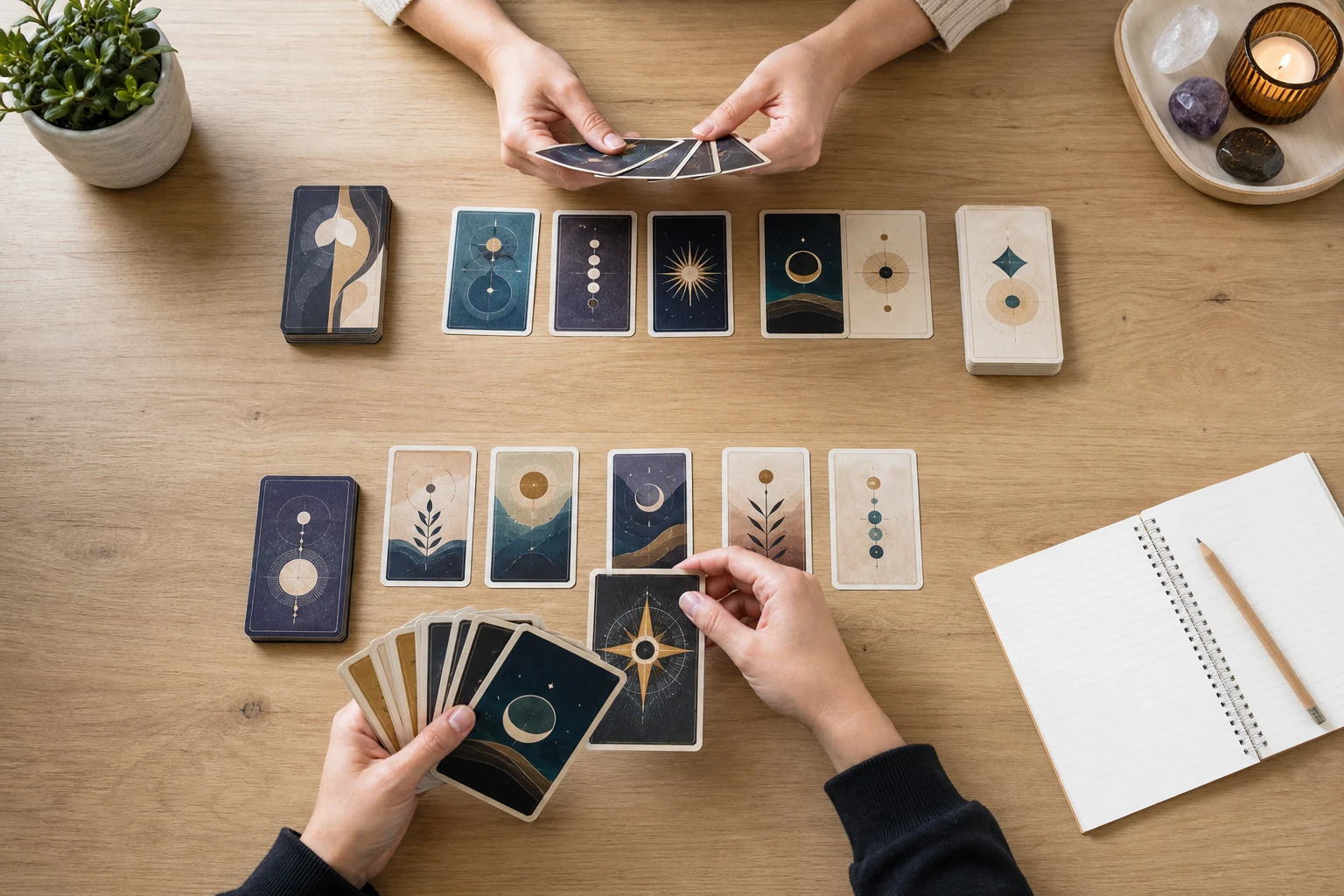
French Tarot online can mean several things. Some sites or apps try to reproduce the traditional game with automated dealing, bidding, and scoring. Others use tarot card art in a video game, visual novel, board-game app, or reading interface. The search phrase tarot card games online is therefore broad, and the right choice depends on what you want to do.
If you want to learn the French Tarot game, choose a digital version that shows the full 78-card playing deck, has a clear rules page, and explains why a move is legal or illegal. A good online version should make following suit and trump obligations visible. It should also show scoring in stages, because beginners often understand the play before they understand the arithmetic.
If you want a tarot card reading game, look for a format that supports reflection rather than competition. That might involve choosing cards, journaling impressions, comparing card meanings, or using a structured spread. The important boundary is that a reading should be treated as symbolic guidance or self-reflection, not as a replacement for professional advice or as a promise about future events.
Tarot Nouveau, Marseille, and Reading Decks
The Tarot Nouveau deck is strongly associated with French Tarot play because it was designed for card-game readability. Its trump scenes are decorative and often show everyday or genre scenes rather than the familiar esoteric sequence many readers expect. That makes it practical for quick visual recognition at a table.
French tarot de Marseille decks are historically important and deeply meaningful for many readers, but they are not always the easiest choice for a fast trick-taking game. Marseille-style cards usually use Latin suits such as cups, coins, swords, and batons. Depending on the edition, the pip cards may require more familiarity to scan quickly. Vintage French tarot cards can be wonderful collectibles, but condition and completeness matter if you want to play.
Reading decks, by contrast, prioritize imagery, symbolism, mood, and interpretation. The 4 types of tarot cards people often ask about can mean different classifications, but in modern reading language the common broad groups are Major Arcana, Minor Arcana, court cards, and numbered pip cards. In game language, the more useful groups are suits, court cards, numbered trumps, and the Excuse.
A Respectful Note About Faith, Etiquette, and the Unspoken Rule
People also ask what God says about tarot cards. There is no single answer that every religious tradition or individual believer would accept. Some people avoid tarot because of their faith commitments. Others treat tarot imagery as art, history, storytelling, or personal reflection. The most respectful answer is to honor your own conscience, avoid pressuring anyone else to participate, and choose activities that fit your values.
The unspoken rule of tarot cards is similar whether you are playing a game or doing a reading: be clear about the frame. If it is a game, play honestly, follow the agreed rules, and keep scoring friendly. If it is a reading, treat the cards as prompts for reflection, not commands. Do not use tarot to override consent, make major decisions for someone else, or present personal interpretations as fixed truth.
Good etiquette also includes handling decks carefully, asking before touching someone else's cards, and explaining the rules before a first hand. For online experiences, it means reading the limits of the tool and keeping a grounded attitude. Tarot can be playful, beautiful, and thought-provoking without needing to become absolute.
How to Choose the Right Tarot Experience
Choose a French Tarot game if you want strategy, trick-taking, scoring, and a social card-table experience. Choose tarot card games online if you want automated dealing or a low-friction way to learn the rules. Choose a tarot-inspired storytelling game if you want a creative group activity. Choose a reading if you want symbolic reflection about a question, mood, or situation.
The best path is often to let the two traditions inform each other without merging them. The game teaches structure, patience, memory, and attention to card order. Reading teaches metaphor, personal association, and reflective questioning. Together, they show why tarot has lasted so long: it can be both a deck for play and a visual language for meaning.
If your curiosity leans toward interpretation after learning the game, try a gentle tarot reading session and notice how differently the same cards behave outside a competitive rule set. A trump that wins a trick at the table may become, in a reading, a symbol of momentum, challenge, timing, or attention. That contrast is the heart of the topic.

FAQ
How do you play the tarot card game?
In the traditional French Tarot game, players use a 78-card deck with four suits, twenty-one numbered trumps, and the Excuse. After the deal, players bid to decide who becomes the taker. Then everyone plays tricks, following suit when possible and using trumps when required. The taker tries to capture enough card points to meet a target based on how many bouts they won.
Is a tarot card game the same as tarot reading?
No. A tarot card game is usually competitive or social, with rules for dealing, bidding, trick-taking, and scoring. A tarot reading uses cards as symbolic prompts for reflection. The same deck family can support both traditions, but the purpose and vocabulary are different.
What deck do I need for French Tarot?
A readable 78-card playing tarot deck is best. A Tarot Nouveau deck is often practical because the suits, trumps, and court cards are easy to recognize. Decorative reading decks may work for casual experimentation, but they can slow down play if ranks and suits are hard to scan.
Can two players play a tarot card game?
Yes, but two-player rules are usually adaptations. They often use extra face-down piles, visible top cards, or simplified scoring to recreate some uncertainty from the standard game. Use two-player play for practice, then try three or four players for the fuller French Tarot experience.
What are the 4 types of tarot cards?
For readings, people often group tarot cards into Major Arcana, Minor Arcana, court cards, and numbered pip cards. For the French Tarot game, it is more useful to think in terms of four suits, court cards, numbered trumps, and the Excuse.
Are tarot card games online good for learning?
They can be helpful if they explain legal moves and show scoring clearly. Look for online versions that use the full 78-card deck and teach the reason behind each rule. If the interface only asks you to pick cards for meanings, it is closer to a reading experience than to the French Tarot game.
What is the unspoken rule of tarot cards?
The unspoken rule is to be honest about the context. In a game, agree on rules and keep play fair. In a reading, treat interpretations as reflective prompts rather than fixed facts. Respect other people's beliefs, comfort levels, and boundaries.