Tarot Card Deck Guide: Cards, Suits, Meanings, and Choosing Your First Deck
June 1, 2026 | By Finnian Grey
A tarot card deck can feel mysterious at first because it is both a set of illustrated cards and a symbolic language. Most beginners want the same practical answers: how many cards are in a tarot deck, what the suits mean, whether every deck follows the same list, and which deck is best to begin with. This guide keeps the focus simple. You will learn the standard structure, the classic meanings behind the main card groups, and how to choose a deck that supports real reflection rather than shelf decoration. If you want to compare these ideas with a gentle digital reading, Free Tarot's online tarot reading experience can give you a low-pressure place to practice.
What Is in a Standard Tarot Card Deck?
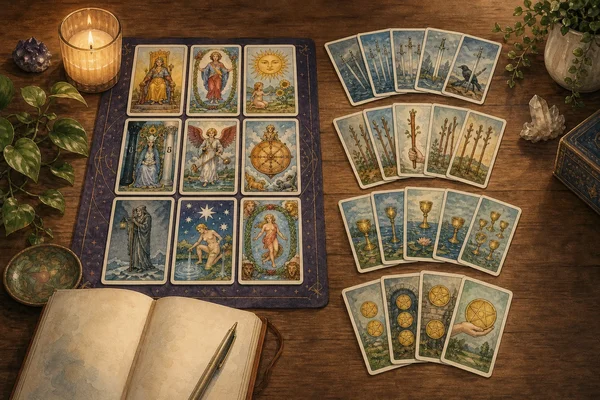
A standard tarot card deck has 78 cards. That number is the basis for many modern decks, including the Rider-Waite-Smith tradition that many beginner books reference. The deck is divided into 22 Major Arcana cards and 56 Minor Arcana cards. Together, they let a reading move between large life themes and everyday situations.
The Major Arcana cards are often treated as the "big story" cards. They point toward archetypes, turning points, lessons, and inner changes. The Minor Arcana cards are more practical. They describe habits, relationships, choices, feelings, conflicts, resources, and daily movement.
The 22 Major Arcana Cards
The traditional Major Arcana tarot card deck list is: The Fool, The Magician, The High Priestess, The Empress, The Emperor, The Hierophant, The Lovers, The Chariot, Strength, The Hermit, Wheel of Fortune, Justice, The Hanged Man, Death, Temperance, The Devil, The Tower, The Star, The Moon, The Sun, Judgement, and The World.
These cards do not have to be read as fixed predictions. The Fool may suggest openness and a new chapter. The Hermit may point to solitude or inner wisdom. Death usually speaks to endings, change, and release rather than literal danger. A card's meaning becomes clearer when you consider the question, the surrounding cards, and your own honest response.
The 56 Minor Arcana Cards
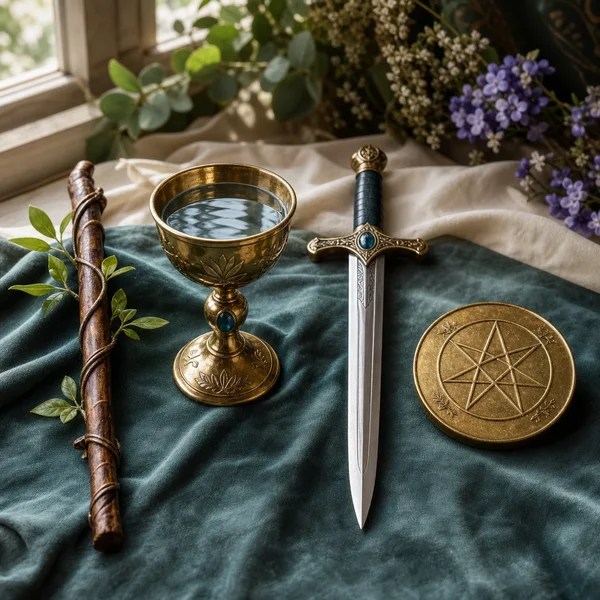
The Minor Arcana is made of four suits: Wands, Cups, Swords, and Pentacles. Each suit has cards numbered Ace through Ten, plus four court cards: Page, Knight, Queen, and King. That creates 14 cards per suit and 56 Minor Arcana cards in total.
This structure is one reason tarot feels organized once you get past the artwork. You are not memorizing 78 unrelated images. You are learning a system of numbers, suits, archetypes, and visual cues that work together.
Tarot Card Deck Suits and Classic Meanings
Tarot card deck suits are one of the easiest ways to start reading with more confidence. Different traditions may vary in wording, but the basic suit pattern is widely recognizable.
Wands are linked with energy, desire, creativity, ambition, action, and momentum. A Wands-heavy reading may ask where passion is rising or where impatience is pushing too hard.
Cups are linked with emotions, relationships, intuition, memory, care, and connection. Cups often invite you to notice what you feel before you rush to explain it.
Swords are linked with thought, communication, conflict, truth, boundaries, and decisions. Swords can feel sharp, but they are not "bad" cards. They often ask for clarity, honesty, and cleaner thinking.
Pentacles are linked with the material world: work, money, health routines, time, home, skills, and long-term stability. Pentacles often bring the reading back to what can be practiced, maintained, or improved step by step.
Classic tarot deck meanings also depend on sequence. Aces often suggest beginnings or raw potential. Tens often show completion, pressure, or fullness. Court cards may represent people, roles, attitudes, or stages of maturity. Once you know the suit and number, the card becomes less intimidating.
How Beginners Can Choose a Tarot Card Deck
The best tarot card deck for beginners is usually the one you can read without fighting the artwork. Beautiful tarot decks are wonderful, but beauty alone is not enough. A first deck should help you notice the scene, mood, characters, symbols, and question behind the card.
Many beginners do well with a Rider-Waite-Smith-based deck because so many books, websites, and courses refer to its images. That does not mean it is the only valid choice. Marseille decks, Thoth-inspired decks, angel decks, feminist decks, handmade decks, anime-inspired decks, and artistic modern decks can all work when the imagery speaks clearly to you.
Before you buy, look for five practical qualities:
- The card scenes are readable at a glance.
- The guidebook explains both upright and reversed meanings, or clearly states its reading style.
- The deck size feels comfortable in your hands.
- The artwork supports the kinds of questions you actually ask.
- The tone feels reflective rather than fear-based.
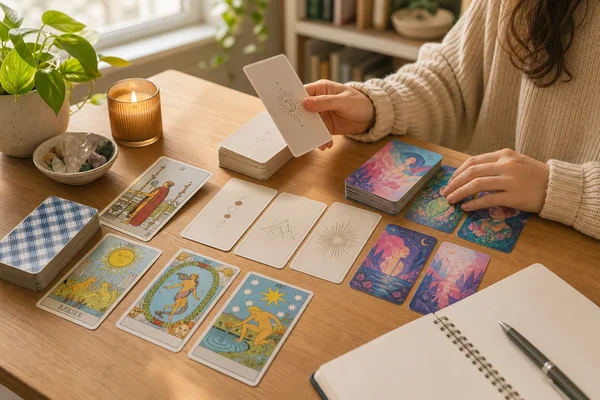
If you are unsure which tarot card deck is best, practice with a simple spread first. A digital reading can help you learn how cards behave in context before you commit to a physical set. Free Tarot's simple tarot reading practice is especially useful for noticing whether you prefer one-card clarity, a three-card story, or a deeper spread.
Buying Tarot Cards Online Without Losing the Plot
Searches for the best place to buy tarot cards online often lead to a mix of publisher shops, bookstores, independent artists, metaphysical stores, marketplaces, and resale listings. The safest approach is to slow down and check the details, especially when a deck is popular or heavily discounted.
Look for clear images of the actual cards, not only the box. Read whether the listing includes a guidebook, digital booklet, or cards only. Check card size, finish, language, number of cards, and shipping origin. If the deck is from an independent artist, look for an official shop or verified publisher page so your purchase supports the creator.
Be careful with listings that use blurry images, strange titles, missing deck information, or prices that seem far below normal. Some cheap copies have poor printing, cropped artwork, thin cardstock, or missing guidebooks. For a beginner, a clear and complete deck is usually better than a rare-looking bargain.
It also helps to choose the deck according to use. If you want to study classic tarot deck meanings, choose a deck with strong symbolic scenes. If you want a calm daily ritual, choose a deck that feels gentle and readable. If you mainly collect artistic beautiful tarot decks, you can prioritize visual style, but keep at least one practical deck for learning.
A Simple First-Deck Checklist
Use this checklist before choosing your first tarot cards deck:
- Can I identify what is happening in most cards without reading the guidebook?
- Does the deck include all 78 cards, unless it clearly says it is an oracle or specialty deck?
- Do the court cards feel distinct enough to learn?
- Do the four suits have a visual pattern I can remember?
- Does the guidebook explain the deck's system?
- Would I feel comfortable using this deck for ordinary questions, not only dramatic ones?
- Does the artwork invite reflection without making every hard card feel threatening?
This checklist matters because tarot is a practice. The deck that looks most impressive online may not be the deck you reach for when you need a quiet moment of clarity. Choose something that supports curiosity, patience, and repeated use.
Use an Online Tarot Card Deck Before You Choose One
An online tarot card deck cannot replace the tactile pleasure of shuffling a physical set, but it can make learning easier. It lets you see card combinations, compare spreads, and notice which symbols naturally draw your attention. It also removes the pressure to buy before you understand what kind of reading style fits you.
For beginners, the best path is often simple: learn the 78-card structure, understand the four suits, try a few gentle readings, then choose a physical deck with more confidence. When you want a reflective next step, Free Tarot's guided tarot reflection can help you explore cards as prompts for insight rather than fixed instructions.
FAQ
How many cards are in a tarot card deck?
A standard tarot card deck has 78 cards: 22 Major Arcana cards and 56 Minor Arcana cards. Some specialty decks have fewer or more cards, but the 78-card structure is the classic modern standard.
What are the 22 cards in a tarot deck?
The 22 Major Arcana cards are The Fool, The Magician, The High Priestess, The Empress, The Emperor, The Hierophant, The Lovers, The Chariot, Strength, The Hermit, Wheel of Fortune, Justice, The Hanged Man, Death, Temperance, The Devil, The Tower, The Star, The Moon, The Sun, Judgement, and The World.
What are the four tarot card deck suits?
The four Minor Arcana suits are Wands, Cups, Swords, and Pentacles. Wands usually connect with action and creativity, Cups with emotions and relationships, Swords with thought and communication, and Pentacles with material life and steady growth.
Are all tarot decks 78 cards?
No. Many tarot decks use the standard 78-card structure, but not all decks do. Some add extra cards, rename suits, change court cards, or blend tarot with oracle-style systems. Always check the deck description before buying.
What is the tarot card for Taurus?
In many modern astrology-tarot correspondences, Taurus is associated with The Hierophant. This connection is symbolic rather than a rule every reader must follow. It often points to values, tradition, learning, commitment, and grounded wisdom.
Which tarot card represents Aquarius?
Aquarius is commonly associated with The Star in many astrology-tarot systems. The Star is often read as hope, renewal, inspiration, and a wider vision after difficulty.
Which tarot card deck is best for beginners?
A clear, well-documented 78-card deck is usually best for beginners. Rider-Waite-Smith-based decks are popular because many learning resources use that imagery, but any readable deck with a helpful guidebook can be a good first choice.