Learn Tarot With a Beginner Practice Plan for Reading Cards With Confidence
June 18, 2026 | By Finnian Grey
If you want to learn tarot, the hardest part is usually not the cards themselves. It is the feeling that you must memorize 78 meanings, choose the perfect deck, understand every symbol, and read spreads fluently before you are allowed to begin. A better path is smaller, calmer, and more practical: learn the structure, practice one card at a time, keep notes, and use readings as prompts for reflection. When you want a simple place to practice without pressure, a beginner-friendly tarot reading space can help you connect study with real card pulls.

What It Means To Learn Tarot
Learning tarot is not only learning card definitions. It is learning a symbolic language. Each card has traditional meanings, visual clues, suit associations, numbers, elemental themes, and a position within the broader story of the deck. A good reader does not simply recite a memorized sentence. They look at the card, the question, the spread position, and the relationship between cards.
For beginners, that distinction matters. If you try to learn tarot by cramming every possible interpretation, you may feel stuck before you ever shuffle. If you treat tarot as a language, you can build fluency through repeated use. You learn a few core ideas, test them in small readings, notice patterns, and slowly develop your own voice.
Tarot is also best approached with healthy boundaries. It can support self-reflection, creativity, and decision-making prompts, but it should not be treated as a replacement for professional legal, medical, financial, or mental health advice. The cards can help you ask better questions. They should not remove your agency.
Learn Tarot Card Meanings Without Memorizing All 78 Cards
The fastest sustainable way to learn tarot card meanings is to understand the deck's structure before studying each card in isolation. A standard tarot deck has 78 cards: 22 Major Arcana cards and 56 Minor Arcana cards.
The Major Arcana cards describe larger life themes, turning points, archetypes, and inner lessons. The Fool, The Magician, The High Priestess, Strength, The Hermit, Death, The Sun, and The World all point to big patterns rather than tiny daily details.
The Minor Arcana cards describe more ordinary situations. They are divided into four suits:
- Wands often connect with energy, action, ambition, creativity, and momentum.
- Cups often connect with emotion, intuition, relationships, and inner response.
- Swords often connect with thought, communication, conflict, and decisions.
- Pentacles often connect with work, body, money, resources, and practical life.
Numbers add another layer. Aces suggest beginnings. Twos often show choice or balance. Threes bring growth or collaboration. Fives can show challenge. Tens often show completion or the weight of a cycle. Court cards add personality, role, maturity, and perspective.
This means you do not need to learn 78 unrelated meanings. You can combine layers. For example, Five of Cups blends the emotional suit of Cups with the tension of a five, so it often points to disappointment, loss, regret, or the need to notice what still remains. Eight of Wands blends the action of Wands with movement and development, so it often points to speed, messages, or rapid progress.
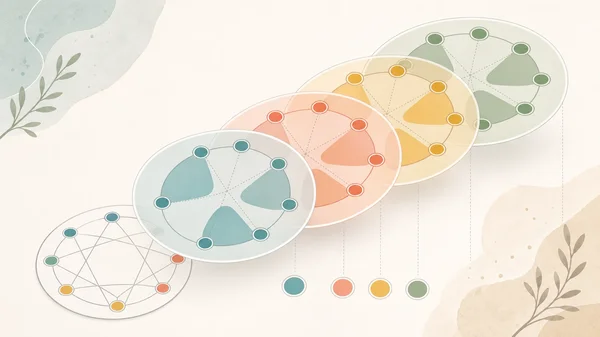
When you study a card, write three things: the traditional meaning, what you notice in the image, and how it might speak in everyday language. That small habit turns a list of meanings into a living practice.
A 7-Day Practice Plan for Tarot Beginners
You can learn tarot cards for free with a simple one-week routine. The goal is not mastery in seven days. The goal is to build a rhythm you can repeat.
Day 1: Meet the deck structure
Separate the Major Arcana, the four Minor Arcana suits, and the court cards. Look through each group without trying to memorize. Notice mood, color, movement, repeated symbols, and which cards feel immediately clear or confusing.
Day 2: Pull one card and describe it
Ask, "What should I pay attention to today?" Pull one card. Before checking any guidebook, describe what you see. Who is in the card? What is happening? What emotion does the image suggest? Then compare your notes with a trusted reference.
Day 3: Build a personal meaning page
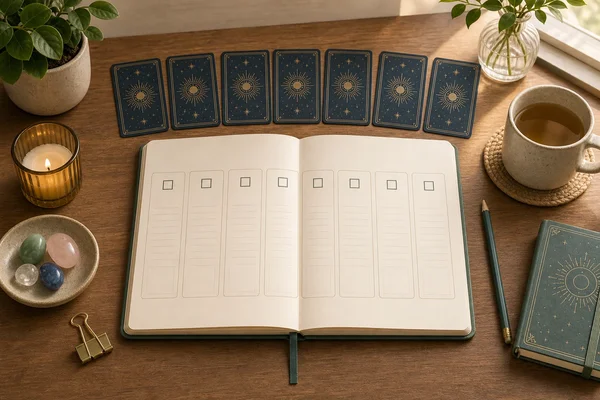
Choose one card from yesterday or today. Create a short page for it in a notebook or digital document. Include keywords, visual symbols, upright themes, reversal possibilities if you use reversals, and one real-life example.
Day 4: Practice a three-card spread
Use a simple layout such as situation, challenge, and next step. A three-card spread gives you enough structure to read relationships between cards without the overload of a large spread. If you want to compare your notes with an online pull, try a simple online tarot reading and observe how the card positions shape the message.
Day 5: Read card combinations
Pull two cards and ask how they speak to each other. Does one card intensify the other? Do they disagree? Does one show the inner feeling while the other shows an action? Tarot becomes much easier when you stop treating cards as isolated dictionary entries.
Day 6: Review your patterns
Look back at your notes. Which suit appears often? Which cards confuse you? Which meanings do you remember without effort? Make a short "study next" list. This keeps your tarot learning focused instead of random.
Day 7: Do one reflective reading
Ask a grounded question, such as "What can I understand more clearly about this situation?" or "What is one helpful next step?" Keep the question open. Write the reading, your interpretation, and any action you might take. Return to the notes a few days later to see what still feels useful.
How to Choose Tarot Learning Resources
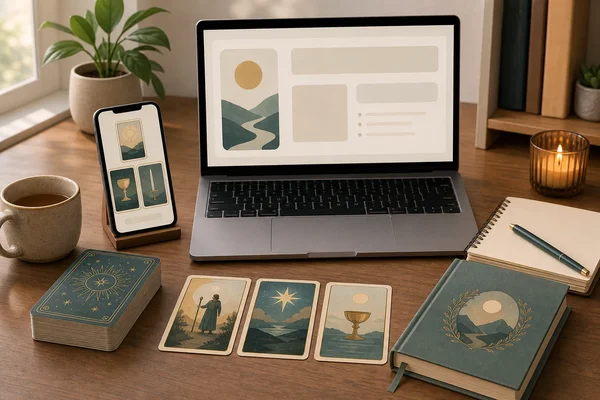
There are many ways to learn tarot online: PDF guides, YouTube lessons, apps, free online tarot courses, books, forums, and classic lesson-based resources such as Joan Bunning's Learn Tarot approach. The best resource is not always the most popular one. It is the one you will actually use consistently.
If you learn visually, choose a deck with clear scenes and a resource that explains symbols directly. Rider-Waite-Smith-based decks are common for beginners because many books, blogs, and videos use that imagery. If you learn by listening, a thoughtful YouTube series or podcast can help you hear how readers connect ideas. If you learn by doing, an app or daily card pull can keep practice easy.
Use this filter before choosing a resource:
- Does it explain both traditional meanings and practical examples?
- Does it encourage practice rather than endless consuming?
- Does it respect tarot as reflection rather than absolute prediction?
- Does it match your deck system?
- Does it feel clear enough that you will return to it?
Avoid using too many resources at once. Cross-referencing can be helpful, but five open tabs can make the same card feel more confusing. Choose one main guide, one backup reference, and your own journal. That is enough for the first stage.
Common Beginner Mistakes to Avoid
The first mistake is asking closed or loaded questions. "Will this happen?" often creates anxiety because it treats tarot like a fixed answer machine. Try questions that leave room for reflection: "What should I consider?" "What pattern is visible?" "What can I do next?"
The second mistake is looking up every card immediately. Guidebooks are useful, but your first impression matters. Spend at least one minute with the image before checking meanings. Your observations teach you how the card communicates.
The third mistake is trying advanced spreads too early. A Celtic Cross can be rich, but it can also overwhelm a new reader. One-card and three-card spreads teach focus, card positions, and combinations with less noise.
The fourth mistake is ignoring context. The Three of Swords in a love question, a career question, and a creative question may carry different shades. The card meaning matters, but the question and spread position shape how you apply it.
The fifth mistake is reading for others before you have boundaries. If you practice with friends, say clearly that you are learning. Avoid sensitive topics where someone needs professional support. Keep the reading reflective, not directive.
Finally, do not measure progress by how many meanings you can recite. Measure it by whether your readings become clearer, kinder, more specific, and more useful over time.
Keep Learning Tarot With Low-Pressure Practice
The best way to learn tarot reading is to make the practice small enough to repeat. Ten focused minutes with one card can teach more than an hour of scrolling. A short journal entry can show you how your interpretations change. A three-card spread can reveal how meanings interact.
If you are learning tarot for beginners, give yourself permission to be imperfect. Use a guidebook. Keep notes. Change your mind. Let the cards be conversation starters rather than final verdicts. When you want a gentle practice session, a free tarot reading for reflection can give you a card pull to study, question, and compare with your own interpretation.
Over time, you will notice that tarot learning is less about finding the single correct answer and more about building a relationship with symbols. The cards become easier to read because you have met them many times in real questions, real moods, and real moments of reflection.
FAQ
Can I teach myself tarot cards?
Yes. Many readers teach themselves tarot through a mix of daily pulls, guidebooks, online lessons, journaling, and practice spreads. A teacher or course can help, but it is not required. The most important pieces are consistency, one main reference, and a habit of writing down your interpretations.
How do I learn tarot card reading for beginners?
Begin with the deck structure, then study one card at a time. Practice daily one-card pulls, move into three-card spreads, and keep a journal of your question, cards, interpretation, and later reflections. Learn meanings and intuition together instead of treating them as opposites.
What is the best way to learn tarot fast?
The best fast method is focused repetition. Pull one card daily, study one suit at a time, and practice small spreads instead of trying to memorize the whole deck at once. You can learn the basics quickly, but confident reading grows through steady practice.
Should I use a learn tarot PDF, app, YouTube channel, or course?
Any of those can work. A PDF is useful for quick reference, an app is good for daily reminders, YouTube helps visual and auditory learners, and a course can add structure. Pick one main format for the first month so your learning stays simple.
What tarot card represents Leo Rising?
In many tarot correspondence systems, Leo is associated with Strength. Some readers also consider The Sun when exploring Leo themes because of vitality, visibility, and confidence. For Leo Rising specifically, read the card as a symbolic reflection of presence, self-expression, and how you meet the world rather than a fixed rule.
What are the do and don'ts of tarot?
Do ask clear, reflective questions. Do keep notes. Do respect privacy and consent when reading for others. Do treat tarot as guidance for reflection. Do not use it to replace professional advice, pressure someone into a choice, or claim certainty about another person's private feelings or future.
Is tarot reading completely true?
Tarot is not best understood as a tool that proves facts with total certainty. It is more useful as a symbolic mirror for reflection, pattern recognition, and clearer questioning. A good reading can feel meaningful, but your choices, context, and practical judgment still matter.