How to Use Tarot for Decision Making: The 6-Card Matrix Guide
March 10, 2026 | By Finnian Grey
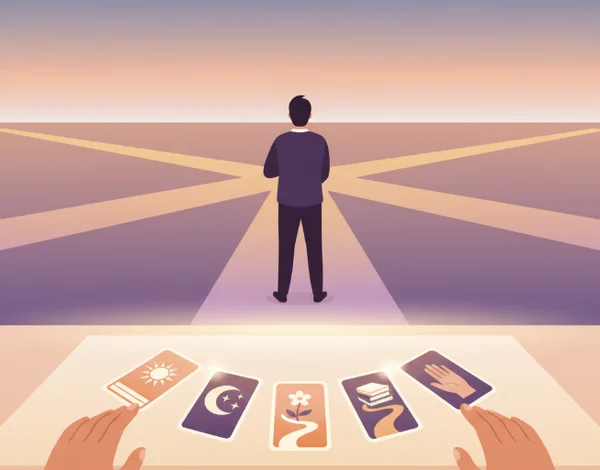
Standing at a crossroads in life, wondering which path to take? Whether you are facing a career shift, a relationship dilemma, or a major move, the pressure of making the "right" choice can be overwhelming. This mental weight often leads to "analysis paralysis," where you feel stuck and unable to move forward. Your answer might be just six tarot cards away.
The 6-card tarot spread is a unique decision-making framework. Unlike a simple "yes or no" draw, this matrix offers a deeper look into your subconscious motivations, hidden fears, and potential outcomes. It doesn't just tell you what to do; it provides the clarity you need to decide for yourself. By using a free tarot reading, you can access a structured perspective that your logical mind might be missing.
Let's discover how the tarot decision matrix can bring clarity when you're facing crossroads in life. We will break down the 6-card matrix step-by-step and show you how to apply these insights to your real-life choices. By the time you finish reading, you'll have a powerful method to transform uncertainty into actionable insights.
Why Use Tarot for Decision Making?
Many people think of tarot as a way to predict the future. However, for those seeking clarity, it is actually a powerful psychological tool. When we face difficult decisions, our minds often get trapped in cycles of worry. Tarot helps break these cycles by introducing new symbols and archetypes that expand our perspective and help us think beyond familiar patterns.
Beyond Predictions: Tarot as a Clarification Tool
Using tarot for decisions is less about "fortune-telling" and more about self-reflection. When you start your journey with a reading, you aren't looking for a fixed destiny. Instead, you are using the 22 Major Arcana cards—like The Fool, The Empress, or The Tower—to mirror your internal state.
These cards represent universal human experiences. When a specific card appears in a reading, it acts as a prompt for your intuition. For example, if you are choosing between two jobs and "The Hermit" appears, it might suggest that you need more time for introspection rather than rushing into a high-pressure role. This process helps you uncover what you already know deep down but haven't been able to put into words.
How the 6-Card Spread Reveals Multiple Perspectives
While a single card can give you a quick "vibe" check, a 6-card spread provides a comprehensive map. Most decision-making models focus only on the "pros and cons." Unlike simpler spreads, the 6-card matrix explores multiple dimensions of your current circumstances.
It reveals insights about:
- Your Current Self: How you are showing up right now.
- Your Desires: What you truly desire, which may differ from what you say you want.
- Your Fears: The hidden anxieties and worries that may be holding you back.
- The Situation: The external factors you might be ignoring in your daily life.
- The Obstacle: The primary challenge or block standing in your path.
- The Outcome: The likely outcome if you continue as you are right now.
By seeing these six areas laid out at once, you can see the "big picture." This multi-dimensional view is why the 6-card spread is one of the most effective tools for using tarot for important choices.
The Tarot Decision Matrix: A Step-by-Step Framework
To get the most out of your reading, you need a process. You shouldn't just click buttons and hope for an answer; you should approach the cards with intention. Here is how to use the 6-card matrix effectively.
Step 1: Formulating the Right Question
The quality of your reading depends on the quality of your question. Avoid "Will I...?" questions, which put you in a passive role. Instead, use "How...?" or "What...?" questions that empower you.
For example, instead of asking, "Will I get the new job?" try asking, "What should I consider before accepting this new career offer?" This invites the cards to provide a tarot decision making framework rather than a simple yes or no. Focus your energy on the specific choice you are weighing before you try this tool.
Step 2: Understanding Your 6 Card Layout Positions
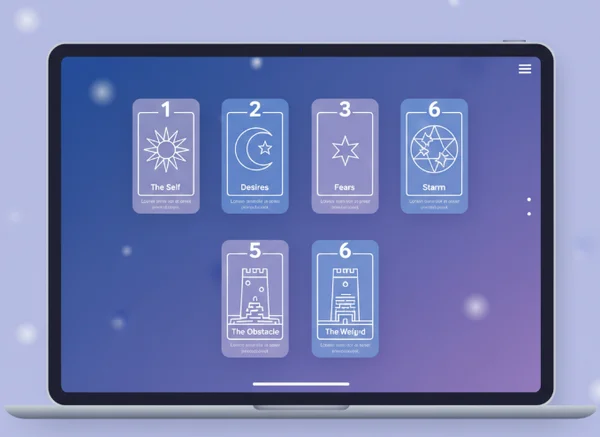
When you use the tool at FreeTarot.org, you will select 6 cards from the 22 Major Arcana. Each position in the sequence has a specific meaning:
-
Card 1 (The Self): This represents your current energy and mindset regarding the decision.
-
Card 2 (Desires): This reveals your underlying goals. Are you seeking security, or are you seeking adventure?
-
Card 3 (Fears): This highlights the "shadow" aspects—the things you are afraid to lose if you make a change.
-
Card 4 (The Path): This illustrates the current trajectory of your life.
-
Card 5 (The Obstacle): This points to a specific challenge you must overcome to reach a clear decision.
-
Card 6 (The Insight): This provides a final piece of wisdom to guide your next step.
Step 3: Interpreting Cards in Context of Your Decision
Once the cards are revealed, look for themes. Are the cards mostly "active" (like The Chariot or The Magician), or are they more "receptive" (like The High Priestess or The Moon)?
If you see The Tower in the "Obstacle" position, it might mean you are resisting a necessary change because you fear chaos. If you see The Sun in the "Desires" position, it confirms that your choice is driven by a need for joy and clarity. Take a moment to read the personalized descriptions provided for each card. This is where the online free tarot card reading becomes a mirror for your life.
Step 4: Weighing the Insights Against Reality
While tarot offers spiritual and psychological perspectives, we still navigate the physical world. The final step in this matrix is grounding your insights—considering how they align with your practical realities like budget, time commitments, and responsibilities.
The cards might suggest a bold leap (like The Fool), but if your practical situation shows you need six months of savings first, then the real insight is to begin saving now, preparing yourself for that bold move when the time is right. Use the cards as a compass, not a set of handcuffs.
Real-Life Applications: Tarot for Major Life Choices
How does this look in practice? Let’s look at three common scenarios where the 6 card spread for decisions can change your perspective.

Career Crossroads: Should I Change Jobs?
Imagine Sarah, a marketing manager who feels uninspired. She is offered a job at a startup but is afraid of the risk. In her 6-card spread, she draws The Emperor in the "Self" position, suggesting she craves more leadership. However, The Moon appears in "Fears," showing she is terrified of the unknown "darkness" of a startup.
By seeing these cards, Sarah realizes her hesitation isn't about her skills—it’s about her need for control. This clarity allows her to negotiate for a clearer job description at the startup, solving the problem before she even starts. If you are in a similar spot, you can see your results today.
Relationship Decisions: Should I Commit?
In relationships, we often see what we want to see. A 6-card spread can be incredibly honest. If a user draws The Lovers in "Desires" but The Devil in "The Situation," it might suggest that while they want love, the current relationship is actually based on unhealthy patterns or obsession.
This doesn't mean "break up." It means "look closer." It provides the tarot card reading for life choices that helps you decide if a relationship is worth the work or if it is time to move on.
Life Direction: Major Changes and New Beginnings
Sometimes we aren't choosing between two things; we just feel lost. In this case, the 6-card spread acts as a "life audit." If The Wheel of Fortune appears in the "Path" position, it suggests that change is inevitable and you should stop resisting the cycle. This can be deeply comforting for someone feeling stuck. It reminds them that life moves in phases.
Common Pitfalls in Using Tarot for Decisions
While tarot is a fantastic tool, it is important to use it with a clear head. There are two main mistakes beginners often make.
Avoiding Confirmation Bias
Confirmation bias happens when you only listen to the cards that tell you what you want to hear. If you want to quit your job and you see The Fool (new beginnings), you celebrate. But if you ignore The Tower (disruption) in the same reading, you are only getting half the story.
To avoid this, look at the "uncomfortable" cards first. What are they trying to tell you? A truly helpful free tarot experience requires you to be honest with yourself about the cards you don't like.
When to Seek Additional Guidance
Tarot is a tool for spiritual and emotional guidance. It is not a substitute for professional advice. If you are making a legal decision, talk to a lawyer. If you have a medical concern, see a doctor. Use tarot to manage your feelings and intuition about these situations, but always pair it with expert human advice in specialized fields.
Conclusion: Your Next Steps in Using Tarot for Clear Decision-Making
Making important choices doesn't need to feel overwhelming or isolating. The Tarot Decision Matrix helps you find clarity amid uncertainty, turning confusion into a path forward. Remember that the 6-card spread is designed to show you your self, your desires, your fears, your path, your obstacles, and your ultimate insight.
The cards don't make the decision for you—they give you the map so you can drive the car. Whether you are facing a minor hurdle or a life-changing event, a bit of extra perspective can make all the difference.
Are you ready to see what your subconscious is trying to tell you? Start your free 6-card reading now and gain the clarity you need to move forward with confidence.
Frequently Asked Questions About Using Tarot for Decision-Making
Is a tarot reading accurate for making important decisions?
Tarot "accuracy" is about how well the symbols resonate with your current reality. It is a tool for how tarot helps with decision making by highlighting things you may have overlooked. Most users find that the cards provide a "gut check" that feels remarkably accurate to their inner feelings.
How often should I use tarot for decision-making?
It is best to use tarot when you feel a genuine sense of confusion or when a new major choice arises. Avoid doing the same reading multiple times a day for the same question, as this can lead to more confusion. Trust the first free online tarot reading you receive for a specific situation.
Can tarot help me choose between two specific options?
Yes. You can perform a 6-card spread while focusing on "Option A," then do another while focusing on "Option B." Compare the "Outcome" and "Obstacle" cards for both. This will help you see which path aligns better with your long-term goals.
What if the cards give conflicting advice?
If the cards seem to contradict each other, it usually reflects an internal conflict. For example, if your "Desires" card is very positive but your "Self" card is very negative, it suggests you want something but don't believe you are capable of getting it. In this case, the advice is to work on your self-belief before making the big choice. Explore your inner themes to find the bridge between these conflicting feelings.