How to Do a Tarot Reading: A Beginner's Step-by-Step Guide
June 13, 2026 | By Finnian Grey
Learning how to do a tarot reading is less about memorizing every possible meaning and more about creating a calm structure for reflection. A good reading gives you a question, a spread, card meanings, and a moment to connect the symbols to real life. If you are new, keep the process simple: choose one clear question, shuffle with intention, draw a small number of cards, and read the cards as a story rather than isolated definitions. You can practice with a physical deck, a journal, or a free online tarot reading space when you want an easy way to explore spreads without setting up a full table.
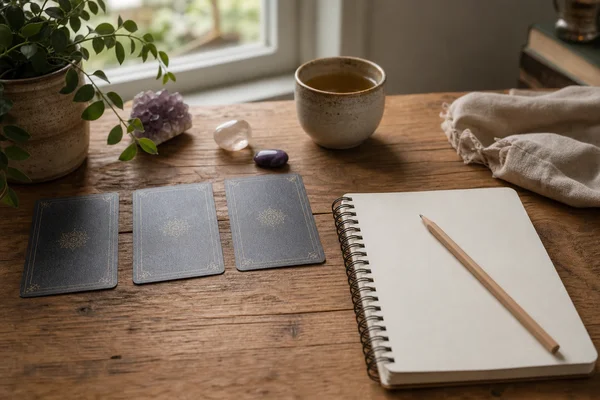
What a Tarot Reading Can and Cannot Do
A tarot reading is a symbolic reflection tool. It can help you name what you are feeling, notice patterns, compare options, or think about a situation from a fresh angle. It should not be treated as a fixed prediction, a replacement for professional advice, or a command about what you must do next.
That boundary matters because beginners often ask, "What is the correct way to do a tarot reading?" The useful answer is: use a method that is clear, respectful, and honest about its limits. The cards do not need to prove anything. They give you images, archetypes, and positions that can prompt better questions.
Before you read, decide the purpose of the session. Are you looking for current moment guidance, emotional clarity, decision support, or practice with card meanings? That purpose will shape your question and your spread.
Step 1: Prepare Your Question
The best tarot readings begin with a question that invites reflection. Instead of asking, "Will this happen?" try asking, "What should I understand about this situation?" or "What energy can I focus on today?" Open questions usually produce more useful readings because they leave room for insight and personal choice.
Here are simple question formats for beginners:
- "What do I need to notice about this situation?"
- "What is supporting me, and what may be blocking me?"
- "What can I learn from the past, present, and likely direction?"
- "What is one grounded next step I can consider?"
If you are learning how to do a love tarot reading, keep the question centered on your own reflection. For example, "What pattern is showing up in this connection?" is usually healthier than trying to read another person's private thoughts as certainty.
Step 2: Set a Calm Reading Space
You do not need candles, crystals, or a perfect ritual. Those can be meaningful if you enjoy them, but the essential setup is attention. Put your phone aside, take a few steady breaths, and write down your question before drawing cards.
If you are reading for yourself, this pause helps separate the reading from anxious guessing. If you are reading for someone else, it helps you stay present and avoid projecting your own story onto their question. A calm space also makes it easier to notice details in the cards: colors, figures, direction, posture, numbers, suits, and repeated symbols.
Step 3: Shuffle Tarot Cards With Intention
There is no single required way to shuffle tarot cards. You can overhand shuffle, riffle gently if your deck allows it, spread the cards on a table and mix them, or use an online shuffle. What matters is that you slow down enough to connect the shuffle to the question.
Try this simple method:
- Hold the question in mind.
- Shuffle until you feel settled.
- Cut the deck once or divide it into three piles if that feels natural.
- Draw the number of cards your spread requires.
If cards fall out while shuffling, you can choose to include them or place them back. Pick one rule before the reading so you are not deciding based on whether you like the card.
Step 4: Choose the Right Tarot Reading Spread
A tarot spread is the structure of the reading. Each position gives a card a role, such as "past," "present," "challenge," or "advice." Beginners usually do better with one to three cards because a smaller spread is easier to interpret clearly.
You can use online tarot reading tools to practice different spread sizes and compare how the same question feels in a one-card, three-card, or deeper layout.
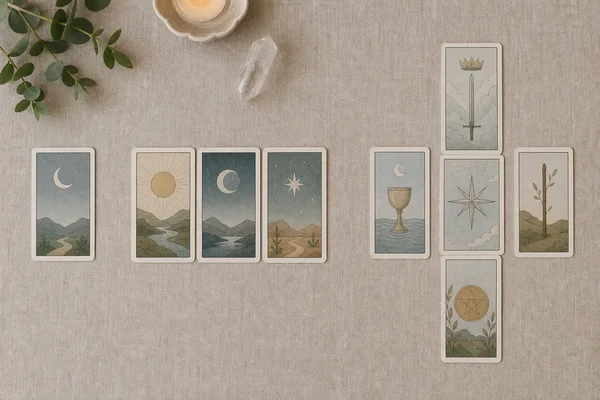
How to Do a One Card Tarot Reading
A one card reading is best for daily reflection, simple focus, or current moment guidance. Ask one clear question, draw one card, and answer three prompts:
- What is the first detail I notice?
- What traditional meaning does this card suggest?
- How could this symbol apply to my question today?
For example, The Hermit may suggest quiet reflection, inner guidance, or stepping back from outside noise. In a daily reading, that does not mean you must isolate yourself. It may simply invite you to make space before responding.
How to Do a 3 Card Tarot Reading
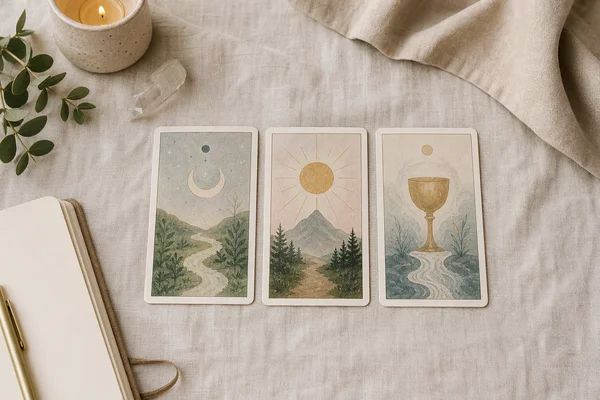
A three card tarot reading is the most useful beginner spread because it gives you structure without overload. The classic version is past, present, future, but you can adapt it:
- Situation, challenge, guidance
- Mind, heart, action
- What helps, what hinders, what to consider
- You, the other person, the relationship dynamic
To do a tarot reading past present future style, place the cards from left to right. Read the past card as background, the present card as the main energy, and the future card as a possible direction if the current pattern continues. Keep the word "possible" in mind. Tarot is most helpful when it supports awareness and choice.
How to Do a Celtic Cross Tarot Reading
The Celtic Cross is a larger spread, often using ten cards. It can be helpful for complex questions, but it is not the best first spread for every beginner. Use it when you can already read one-card and three-card spreads without feeling lost.
Common Celtic Cross positions include the present situation, crossing challenge, foundation, recent past, conscious focus, near future, your role, outside influences, hopes or fears, and possible outcome. Because it has many moving parts, read it in clusters. First look at the central issue. Then compare past, foundation, and conscious focus. Finally, consider the outer influences and possible direction.
Step 5: Read the Card Meanings in Layers
When a card appears, do not rush straight to a keyword. Start with the image. What is happening in the scene? Is the figure moving, waiting, guarding, celebrating, choosing, resting, or struggling? Which colors stand out? Does the card feel open, tense, joyful, or heavy?
Then add traditional tarot card meanings. Major Arcana cards often point to larger life themes, turning points, or archetypes. Minor Arcana cards often speak to daily experience through the four suits: Cups for emotion and relationships, Wands for energy and creativity, Swords for thought and communication, and Pentacles for material life, work, body, and resources.
Finally, connect the card to its spread position. The same card can speak differently depending on where it lands. The Tower as a "challenge" may point to disruption. The Tower as "guidance" may suggest telling the truth about what is already unstable. The card meaning, position, and question work together.
Step 6: Connect the Cards Into a Story
Many beginners read each card separately and then feel stuck. A stronger method is to look for relationships between cards. Are several cards from the same suit? Are the people facing each other or turning away? Do the numbers rise or fall? Is there a movement from confusion to clarity, or from action to rest?
In a three card spread, the middle card often acts like the hinge. It shows what is alive right now. The first card gives context, and the third card suggests a direction or next theme. In a five card tarot reading, you might read the first three cards as the core story and the last two as advice and integration.
If the cards seem contradictory, do not force them into one answer. Contradiction can be the reading. It may show competing needs, mixed feelings, or a gap between what you think and what you want.
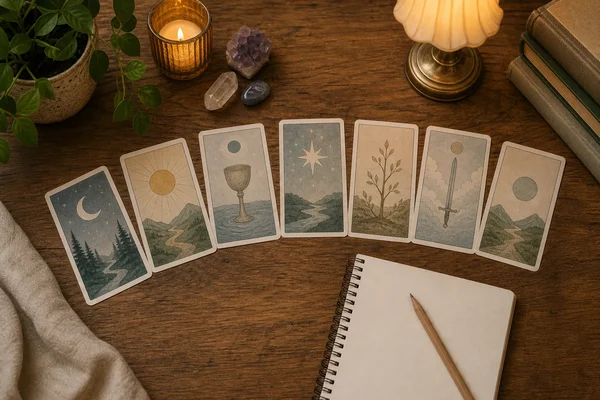
How to Do a Tarot Reading on Yourself
Reading for yourself is convenient, but it can be emotionally noisy. You may want the cards to confirm an answer you already prefer. To keep the reading useful, write the question before drawing, use a small spread, and record your first impressions before looking up meanings.
Try a simple self-reading template:
- My current energy
- What I may be missing
- A helpful next step
After the reading, ask, "What part of this feels practical?" If nothing feels clear, set the cards aside and return later. You do not need to keep pulling more cards until you get a comfortable answer. That usually creates confusion rather than insight.
How to Do a Tarot Reading for Someone Else
When reading for someone else, begin with consent and boundaries. Ask what they want to explore, repeat the question back in neutral language, and remind them that the reading is reflective rather than final authority.
During the reading, describe what you see before interpreting it. For example, "This card shows someone pausing before choosing a path" is more useful than announcing a dramatic outcome. Invite the other person to respond: "Does that image connect with anything in your situation?"
If you are learning how to do a tarot reading for someone else far away, the same principles apply. You can ask them to share a question by message or call, shuffle on their behalf, and send a clear explanation of the spread. Keep the tone grounded, avoid certainty, and leave room for their interpretation.
Common Beginner Mistakes to Avoid
The first mistake is using too many cards too soon. A large spread may look impressive, but it can bury the answer. Begin with one card or three cards until you can explain the reading in plain language.
The second mistake is asking the same question repeatedly. If you draw again and again because you dislike the answer, the reading becomes a loop. Instead, ask a better follow-up, such as, "What can I reflect on from this card?"
The third mistake is treating card meanings as rigid. Meanings matter, but tarot is also visual and contextual. The Queen of Cups in a love reading, a career reading, and a daily self-care reading will not speak in exactly the same way.
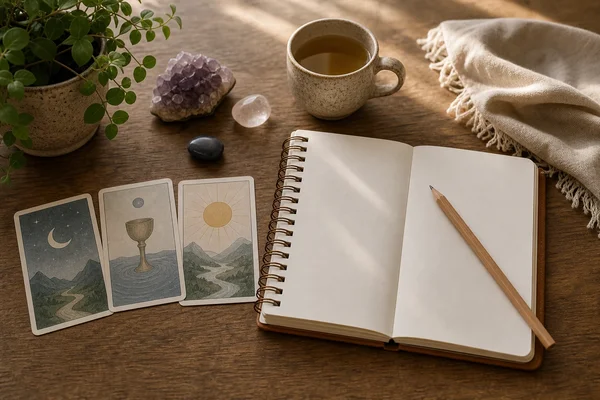
The fourth mistake is forgetting to journal. A few notes can show you how your interpretations develop over time. Write the date, question, spread, cards, first impressions, and one practical reflection.
Use Your Reading for Reflection, Not Certainty
The most grounded way to learn how to do a tarot reading is to practice often, stay curious, and keep the reading connected to real reflection. Choose a question, draw a simple spread, read the images, check the meanings, connect the story, and decide what you want to consider next.
If you want a gentle place to practice without pressure, explore a beginner-friendly tarot practice and compare how different spreads shape your understanding. Treat each reading as a conversation with symbols, not a fixed verdict. Over time, you will become more comfortable noticing patterns, asking better questions, and using tarot as a calm tool for self-exploration.
FAQ
How do you start a tarot reading for beginners?
Start with one clear question, a calm pause, and a small spread. A one-card reading is enough for daily guidance, while a three-card spread gives more structure. Write down your question before drawing so the reading stays focused.
What is the correct way to do a tarot reading?
The correct way is the one that is clear, respectful, and consistent. Ask a reflective question, choose a spread, shuffle, draw the cards, read each card by image, meaning, and position, then connect the cards into a story. Avoid treating the reading as a fixed outcome.
How do I do a tarot reading on myself without bias?
Use written questions, small spreads, and a journal. Record your first impressions before checking a guidebook. If you feel emotionally attached to one answer, wait before interpreting or ask a neutral follow-up question about what you can learn.
How do I do a tarot reading for someone else?
Get consent, clarify their question, explain the spread, and describe the cards in neutral language. Invite their response instead of making absolute statements. Keep the reading supportive, reflective, and within healthy boundaries.
How do I do a 3 card tarot reading?
Choose three positions, such as past, present, future or situation, challenge, guidance. Shuffle while focusing on the question, draw three cards, and place them left to right. Read each card in its position, then connect the three cards as one short story.
Can I do a tarot reading without memorizing all the cards?
Yes. You can begin by noticing the image, mood, suit, number, and spread position, then check a guidebook or card meanings resource. Memorization comes with practice, but reflection and observation can begin from your first reading.
What is the tarot card for Gemini?
Gemini is commonly associated with The Lovers in many tarot and astrology systems. In a reading, The Lovers can point to choice, relationship dynamics, alignment, values, and communication rather than romance alone.
What is the tarot card for Taurus?
Taurus is commonly associated with The Hierophant. In a reading, The Hierophant can suggest tradition, teaching, shared values, spiritual structure, or learning from established wisdom.