Free Tarot Journal Templates: Deepen Your 6-Card Reading Insights
December 25, 2025 | By Finnian Grey
Have you ever finished a tarot reading, felt a spark of insight, and then watched it fade away within hours? A powerful 6-card spread from FreeTarot.org can offer profound guidance on your life's path. But without reflection, these important messages can get lost in the noise of daily life. This is where a tarot journal comes in.
Using a structured journal helps you capture, analyze, and apply the wisdom from your reading. It transforms a fleeting moment of clarity into a lasting tool for personal growth. This guide will provide you with free tarot journal templates designed specifically to deepen the insights from your next free tarot reading. Let’s unlock the full potential of your cards.

Why Journaling After Your Free Tarot Reading Transforms Your Insights
Journaling is the bridge between receiving a message and living its wisdom. A tarot reading shows you a snapshot of your current energy and potential paths. However, the real magic happens when you sit with these symbols and connect them to your own life. It's a simple practice that can dramatically enhance your understanding.
From Temporary Insight to Lasting Wisdom
A tarot card holds layers of meaning. The Emperor might signify structure, but what does that mean for you right now? Does it relate to your career, your habits, or your relationships? Journaling gives you the space to explore these connections.
When you write down your initial thoughts and feelings about each card, you create a permanent record of your intuitive responses. This record allows you to track patterns over time, notice recurring themes, and see how your journey unfolds. An insight that seems small today might reveal its full significance weeks later when you look back at your journal.
How Journaling Amplifies Your Free Tarot Experience
Think of journaling as having a conversation with your higher self. The cards present the topics, and your pen starts the dialogue. This practice helps you:
- Solidify Meanings: Writing helps clarify your thoughts and cements the cards' messages in your mind.
- Boost Intuition: Regularly reflecting on card imagery strengthens your intuitive muscle, making future readings even more insightful.
- Create Accountability: By writing down action steps or goals inspired by your reading, you create a personal commitment to your growth.
- Track Your Progress: A tarot journal becomes a beautiful chronicle of your personal development, showing you how far you've come.
Ready to see for yourself? After your next 6-card reading, use the prompts below to start your journey.
Your Free Tarot Journal Templates for Each Card Position
The unique 6-card spread on FreeTarot.org offers a focused look into your life. Each position has a specific role, guiding you from self-awareness to potential outcomes. Here are journal prompts for each of the six cards to help you explore their messages more deeply.
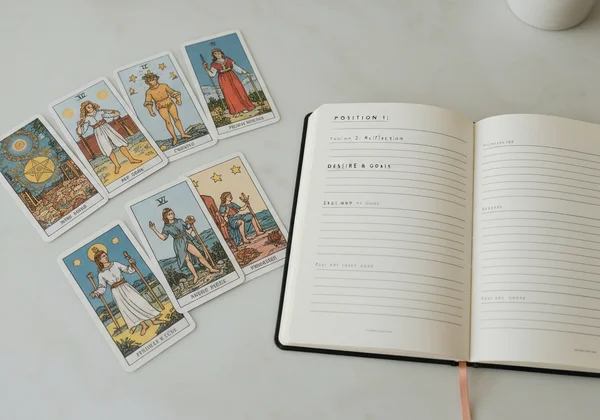
Position 1: Self-Reflection Prompts
This card represents your current self, your core identity in relation to the question.
- What was my immediate emotional reaction to this card?
- How does this card's energy show up in my personality or daily life right now?
- What strengths or weaknesses does this card highlight about me in this situation?
Position 2: Desire & Goals Exploration
This card reveals your underlying desires, hopes, and what you truly want to achieve.
- Does this card surprise me? Does it reflect a hidden desire I haven't admitted?
- What does this card say about my ultimate goal in this matter?
- How can I align my actions with the positive aspects of this desire?
Position 3: Challenges & Obstacles Analysis
This card points to the challenges, fears, or blockages standing in your way.
- What fear does this card bring to the surface for me?
- Is this obstacle internal (a mindset) or external (a situation or person)?
- What is the first small step I can take to start addressing this challenge?
Position 4: External Influences & Support
This card represents the people, environment, or external factors that influence your situation.
- Who or what in my life does this card remind me of?
- Is this influence helping or hindering me? How?
- How can I seek out more supportive influences or protect myself from negative ones?
Position 5: Best Course of Action
This card offers advice on the best path forward. It's the practical guidance you can apply now.
- What specific action is this card suggesting I take?
- How does this advice make me feel? Empowered, hesitant, or scared? Why?
- If I follow this advice, what is the best possible short-term result?
Position 6: Potential Outcome & Future Insights
This final card shows the likely outcome if you follow the suggested course of action. It's a glimpse into your potential future.
- How do I feel about this potential outcome? Is it what I hoped for?
- What lesson does this outcome teach me, regardless of whether it's "good" or "bad"?
- What can I do today to move toward this outcome's most positive expression?
Creating Your Tarot Journaling Practice
Consistency is more important than perfection. You don't need a fancy book or an hour of free time to start. The goal is to create a simple, sustainable ritual that feels good to you.
Setting Up Your Tarot Journal Space
Your journal can be a simple notebook, a digital document, or a dedicated binder. Choose whatever feels most comfortable. To make the practice special, find a quiet corner where you won't be disturbed. You might light a candle, play soft music, or simply take a few deep breaths before you begin. The key is to signal to your mind that it's time to reflect.

Timing Your Journaling: When to Reflect on Your FreeTarot Reading
The best time to journal is shortly after your reading, while the impressions are still fresh. Many people find it helpful to perform their online tarot reading and then immediately spend 10-15 minutes writing.
You could make it a morning ritual to set the tone for your day, or an evening practice to process events and clear your mind before sleep. Experiment and find a time that fits naturally into your schedule. Even a few minutes of focused writing is more powerful than none at all.
Deepening Your Intuitive Connection Through Writing
Don't worry about perfect grammar or spelling. This journal is for you alone. Let your thoughts flow freely onto the page without judgment. This is often called "freewriting."
If you get stuck, look closely at the card's imagery. What colors, symbols, or characters stand out? What story do they seem to tell? Write it all down. Sometimes the most profound insights come from these seemingly random observations. Trust the process and trust your inner voice.
Your Next Steps in Tarot Self-Discovery
Your tarot journal isn't just a worksheet—it's your personal portal to deeper self-discovery and intuitive wisdom. By consistently reflecting on the messages from your 6-card spread, you build a powerful relationship with your intuition. You learn to recognize patterns, honor your feelings, and navigate life with greater confidence and clarity.
Think of tarot as your ongoing journey of self-discovery, with each reading marking a new milestone. Each reading is a new opportunity to learn something about yourself. Use these tools to transform your readings from a moment of curiosity into an ongoing practice of personal empowerment.
Ready to begin? Get your personalized 6-card spread now and use these prompts to start your journey inward. Your next great insight is just a click away. Start your journey now.
Frequently Asked Questions About Tarot Journaling
How often should I journal after a free tarot reading?
It's most effective to journal immediately after a reading to capture fresh insights. However, you can also journal daily or weekly to reflect on a single important reading. The best frequency is whatever you can maintain consistently.
What if I don't understand some cards in my reading?
That's perfectly normal! Write down "I don't understand this card yet." Then, describe the card's imagery and any feelings it brings up. The meaning may become clear later. You can also use the Major Arcana guides on our site to learn more after your free reading.
Can I use these journal templates with other tarot spreads?
Absolutely. While these prompts are tailored to the 6-card spread, the core ideas—reflecting on self, desires, challenges, and outcomes—are universal. You can easily adapt them to almost any tarot spread you use.
How do I know if I'm journaling "correctly" about my tarot reading?
There is no "correct" way to journal. If you are writing honestly and exploring your thoughts, you are doing it right. The goal is self-discovery, not a perfect analysis. Trust your intuition and let the process be your guide.
Where can I find more free tarot journaling resources?
The best resource is your own experience. The more you practice, the more you will learn. Start by getting a reading on our platform and simply writing down your thoughts. Your journey of discovery begins with that first free tarot card reading and your willingness to explore its meaning.